
If you have a tree near a sidewalk in NYC, start by figuring out what part of the property it affects before anyone cuts roots, trims branches, or plans to take it down. A sidewalk tree, front-yard tree, or tree growing close to a fence can involve different next steps, and Dragonetti can help with permit help, site review, and practical options when the tree creates a real issue.
This is not just a city-versus-private label problem. The real question is what the tree is doing: lifting sidewalk panels, crowding a fence, hanging over pedestrians, or blocking a project area. Once you name the issue, the next step is easier to choose.
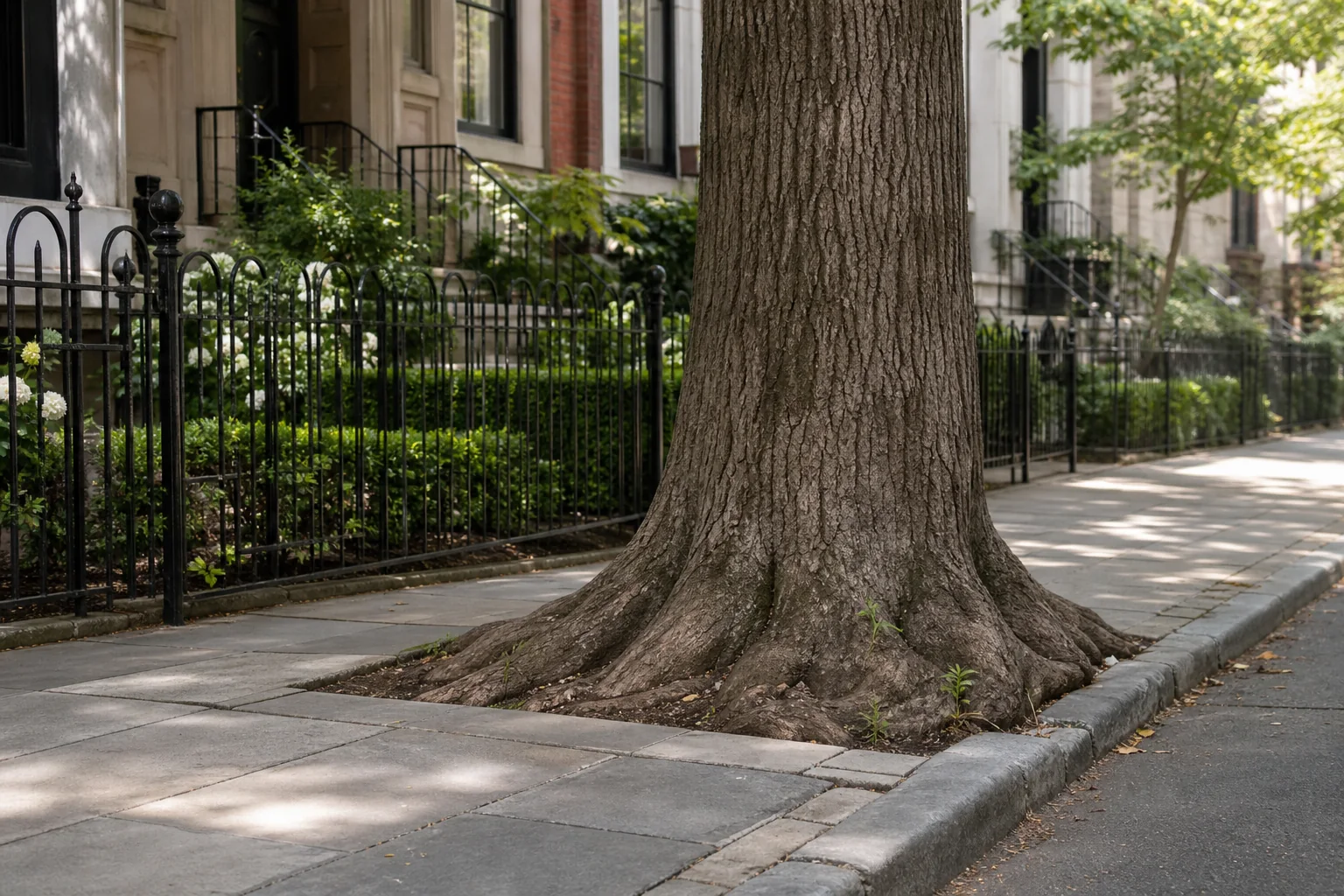
Why Sidewalk Location Matters
A tree growing beside the curb is treated differently from a tree behind a private fence. A tree planted in a sidewalk pit may fall under city review. A tree rooted inside a private yard may be the owner’s responsibility, even if branches reach toward the sidewalk. Some cases are obvious. Others need photos and a closer look.
NYC Parks provides official guidance for tree work permits. Dragonetti can help review the visible site conditions, but city agencies control city-managed tree decisions and timing.
What To Check First
Before you call, step back and look at the full setting. The tree base matters more than one branch in a photo. Try to capture the curb, sidewalk, fence, tree pit, front yard, and building entrance in the same wide view.
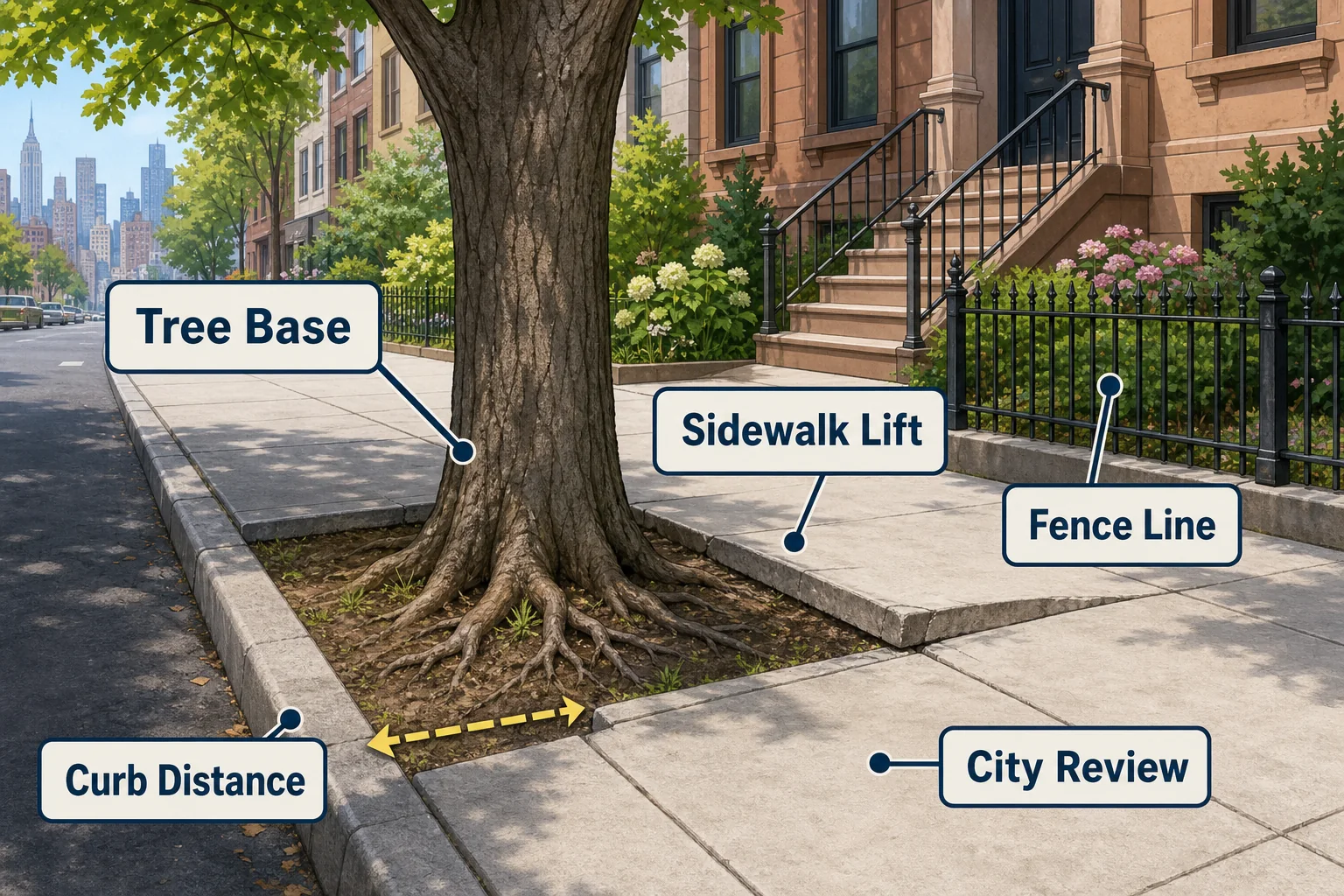
- Tree Base: Is the trunk growing in a sidewalk pit, inside a fence, or between the two?
- Sidewalk Lift: Are the panels raised, cracked, rocking, or creating a trip point?
- Curb Distance: Is the tree clearly part of the curbside planting strip?
- Fence Line: Does the trunk sit inside private property or outside the fence?
- City Review: Could the tree be city managed or tied to a public sidewalk concern?
When Sidewalk Lift Becomes A Real Issue
Minor unevenness is common on older NYC blocks. The concern grows when lifted panels create a trip hazard, roots are exposed, water collects near the house, or the tree is also showing stress. Cutting roots to flatten a sidewalk can make a tree unstable, so it should not be treated like a simple paving repair.
If the tree also leans, drops large dead limbs, has trunk cracks, or looks weak at the base, ask about a risk review. If the tree is already broken or creating immediate danger, use the urgent tree help page instead.
What To Send Before You Ask For Help
Good photos save time. Send one wide street-facing photo, one close photo of the tree base, one showing the sidewalk panels, and one showing the fence or property line. If branches are low over pedestrians, include a photo from across the street so the full clearance issue is visible.
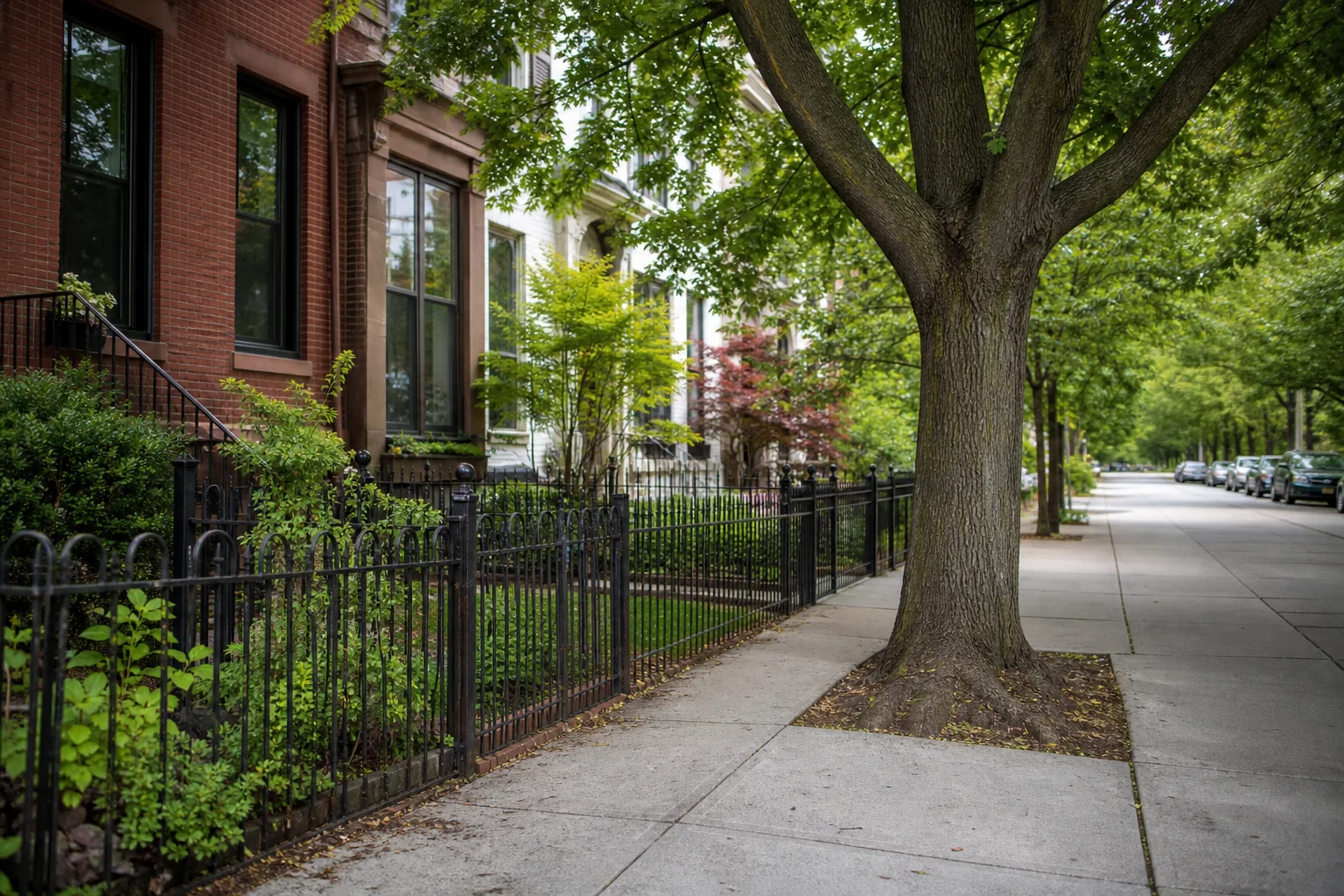
Once the location and issue are clear, Dragonetti can talk through practical next steps, from private branch work to permit review to safely removing trees that are truly private and causing a confirmed problem.
Keep Reading
- Tree Roots Lifting Pavement
- How Close Can A Tree Be To My House Or Fence?
- Tree Is Leaning
- Can You Legally Cut A Neighbor’s Tree Branches That Hang Over Your Property Line?
FAQs
No. A tree near the sidewalk may be city managed or private depending on where it grows. The tree base, curb, fence line, and property layout all matter.
Do not assume you can cut sidewalk-facing branches without review. If the tree may be city managed, NYC Parks guidance or a permit process may apply.
Take photos of the lifted panels, tree base, curb, and fence line. Avoid cutting roots yourself because root damage can make the tree less stable.
Ask for help when sidewalk lift is spreading, branches hang low over pedestrians, the trunk is damaged, or the tree location is unclear.
Yes. Dragonetti can review visible conditions and help you understand whether private work, permit help, or a city process should be discussed.
If a tree near the sidewalk is creating a real problem, send clear photos before making a plan. Dragonetti can help review the site, discuss permit questions, and point you toward the right next step for your property.