
Tree removal in New York City is rarely just a tree problem. The tree may be wedged between a fence and a garage, leaning over a roof, growing beside a neighbor’s property, or sitting close to service lines. In tight spaces, the safest plan often depends less on the height of the tree and more on what surrounds it.
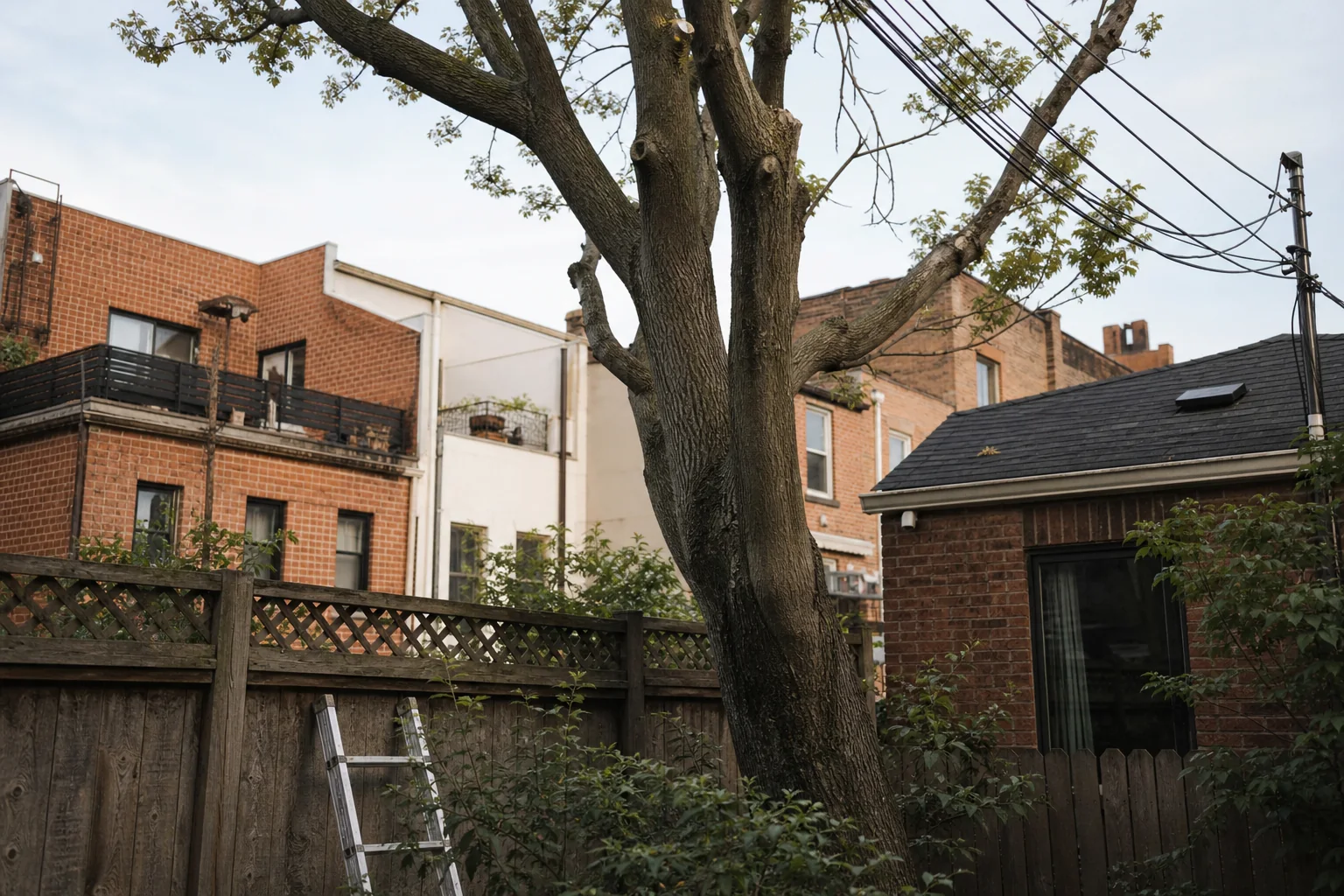
This is where a careful site review matters. Before work begins, Dragonetti looks at access, drop zones, nearby structures, debris handling, and whether the tree condition calls for tree risk assessment, pruning, full removal, or emergency service.
Why Tight NYC Removals Need a Different Plan
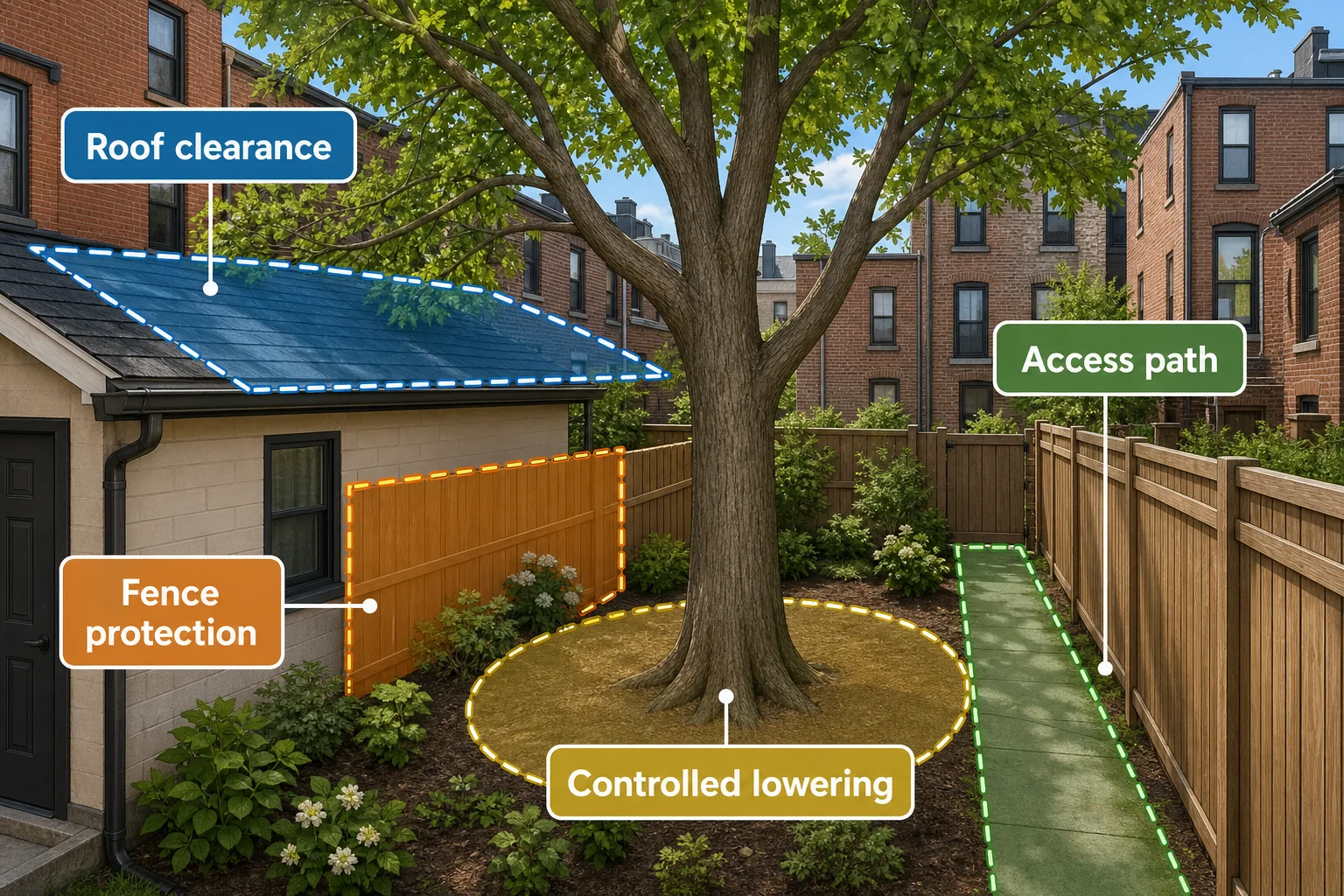
On a wide open property, crews may have more room to stage equipment and lower sections safely. In Brooklyn, Queens, Manhattan, and the Bronx, many trees are surrounded by walls, parked cars, narrow alleys, sheds, fences, and shared property lines. That changes the work.
- Access: Can material be moved through a gate, side passage, driveway, or building entrance?
- Overhead concerns: Are branches near a roof, service drop, cable, or neighboring structure?
- Landing area: Is there room to lower sections without damaging fencing, patios, gardens, or masonry?
- Cleanup route: How will logs, brush, and chips leave the property without creating a mess inside or outside the home?
Power Lines Require Axtra Caution
If branches are touching or very close to energized utility lines, keep people away and do not try to cut, pull, or move the branches yourself. Utility-related hazards may require coordination with the utility company or emergency services. Dragonetti can review tree conditions near structures and help plan appropriate tree work, but live electrical hazards must be handled through the right safety process.
If a storm has already brought branches down onto wires or created immediate danger, start with safety first. Stay clear of the area, call the appropriate emergency or utility contact, and then arrange emergency tree removal once the site can be handled safely.
Roofs, Fences, and Neighboring Property
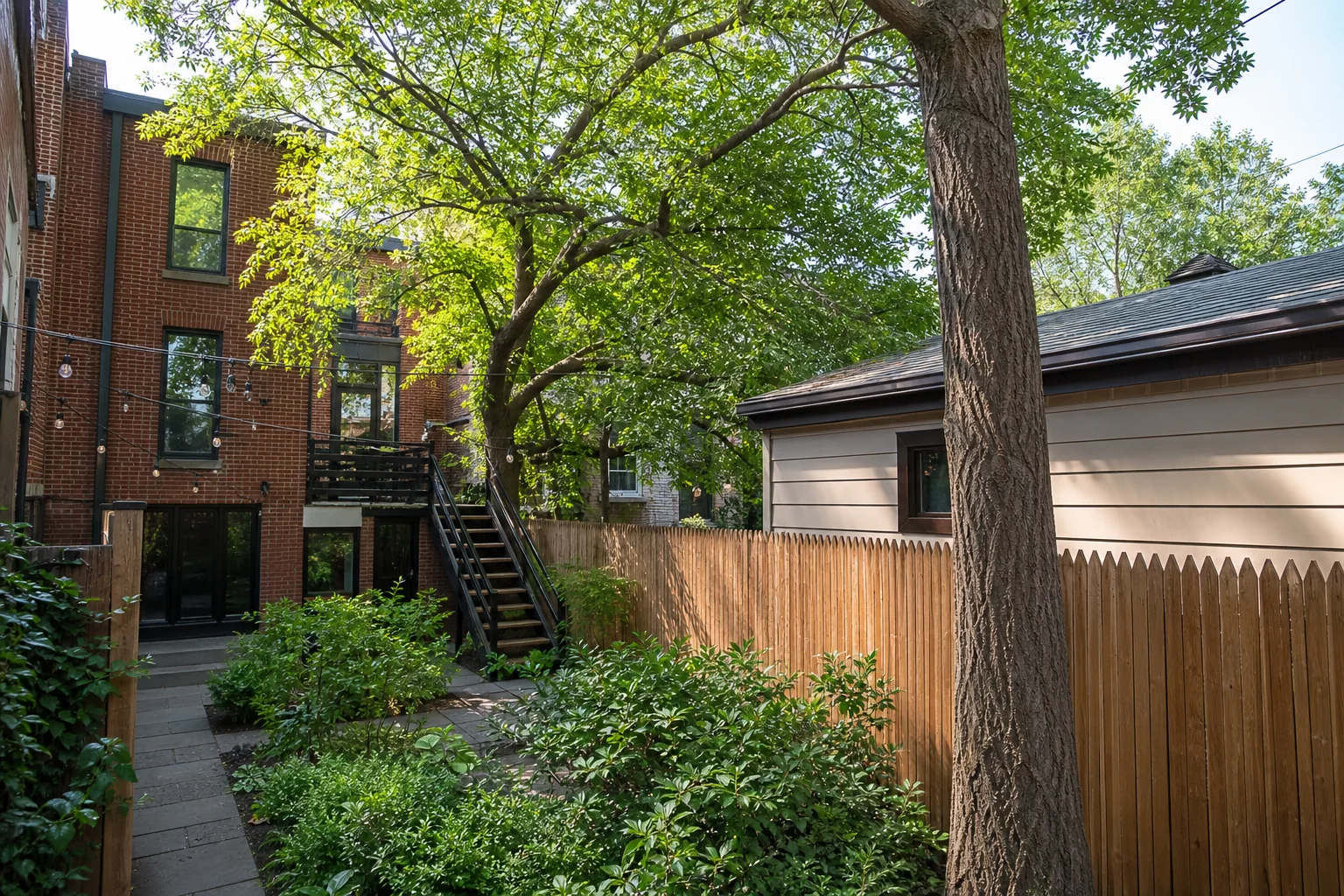
Branches over a roof or fence do not automatically mean the whole tree must come down. Sometimes selective tree pruning can reduce clearance issues. Other times, the trunk is compromised, the canopy is heavily imbalanced, or the root zone has changed enough that removal is the more practical option.
The key is to avoid guessing from one symptom. A branch over a garage might be a pruning issue. A hollow trunk leaning toward that garage may be a removal issue. A tree pressing into a fence may be an access and property-line conversation. A professional review helps separate inconvenience from risk.
What to Prepare Before Requesting an Estimate
Good photos make the first conversation faster. Take one wide photo from each side of the tree, a photo of the base, a photo showing the nearest roof or fence, and a photo of any overhead lines from a safe distance. If access is tight, include the gate, alley, driveway, or path crews would use.
You do not need to solve the whole job before calling. The goal is to give enough context for Dragonetti to understand the site and recommend the next step.
When Removal May Make More Sense than Pruning
Removal may be the better option when the tree is dead, severely decayed, unstable, storm-damaged, or too close to structures to manage safely with routine pruning. It may also make sense when repeated pruning would leave the tree structurally poor or unable to recover.
If you need help deciding, start with tree removal service or request a review through the quote form. A practical site review can turn a stressful backyard problem into a clear plan.
A Typical Tight-Access Job: What a Brooklyn Backyard Removal Looks Like
To make this less abstract, here is roughly how a tight-access removal plays out in a typical Brooklyn or Queens backyard. The tree sits behind a rowhouse, reachable only through a narrow side gate or a basement-level walkout, with a fence on one side and a shared property line on the other. Before bringing in equipment, the crew walks the full access route from the street, checking gate widths, overhead wires along the alley, and whether any patio, deck, or garden bed sits in the likely drop zone.
Because there is no room to fell the tree in one piece, the work is done in sections, starting from the top down. Each cut piece is lowered by rope rather than dropped, and branches are broken down further before being carried back out through the same access route they came in on. Debris usually leaves through the same gate or passage the crew used to get in, which is why confirming that path ahead of time matters as much as assessing the tree itself.
Jobs like this typically take longer than an open-yard removal of a similarly sized tree, simply because more of the work is manual lowering and carrying rather than mechanical dropping. It is also why photos of the access route, not just the tree, make such a difference when requesting an estimate. A crew that already knows the gate is narrow can plan equipment and timing correctly before the truck ever pulls up.
One more practical note: in a tight-access job, permits or coordination can add time to the schedule even after the tree work itself is planned. If the drop zone touches a shared driveway, a neighboring fence, or a sidewalk, loop in whoever else uses that space before the crew arrives, so scheduling around it does not become a last-minute scramble on the day of the job.
FAQs
Possibly, but energized lines require extra caution and may require utility coordination. Do not approach, cut, or pull branches that are touching or close to live wires.
Often, yes. The plan depends on access, tree size, surrounding structures, and how material can be lowered and removed from the property.
Sometimes. If the tree is otherwise healthy and structurally sound, pruning may solve the clearance issue. If the tree is compromised, removal may be safer or more practical.
Send wide photos of the tree, the base, the roof or fence nearby, any overhead lines from a safe distance, and the access route crews would use.
No. Keep people away from the area and contact the appropriate utility or emergency service. Tree work should wait until the electrical hazard is handled through the right safety process.