
In this article
Every time a tree gets pruned or taken down in your neighborhood, the branches run through a chipper and turn into a pile of wood chips that has to go somewhere. For a Brooklyn gardener, that pile is one of the most useful free materials you can get your hands on. Wood chips mulch your beds, build soft paths, smother weeds, and slowly feed your soil, all from a byproduct of everyday tree work. You just have to know what to do with them.
This guide runs through the best ways to put wood chips to work in a small city yard, the right way to spread them so they help instead of harm, and how to get a load delivered without paying for bagged mulch. None of it is complicated. A few inches of chips in the right places can change how a garden looks and how much weeding you do all summer.
Why Wood Chips are a Gardener’s Secret
Wood chips do several jobs at once, which is what makes them so handy in a tight yard where every square foot counts. They hold moisture in the soil during a hot NYC summer, keep roots cooler, block most weeds, and break down into rich organic matter that feeds the ground over time. They also keep yard waste out of the trash, which matters in a dense borough where green space is precious and disposal is a hassle. Instead of paying to haul brush away and then paying again for bagged mulch, you can close the loop right in your own backyard. That is good for the garden and good for the wallet.
Did you know?
Arborist wood chips are usually better for soil than store-bought bark mulch. Because they include leaves, bark, and small twigs in a mix of sizes, they break down into a more complete, fungal-rich layer that mimics a forest floor. Bagged mulch is more uniform and pretty, but the messy mix is what your soil actually likes.
Mulch Around Trees, Shrubs, and Beds
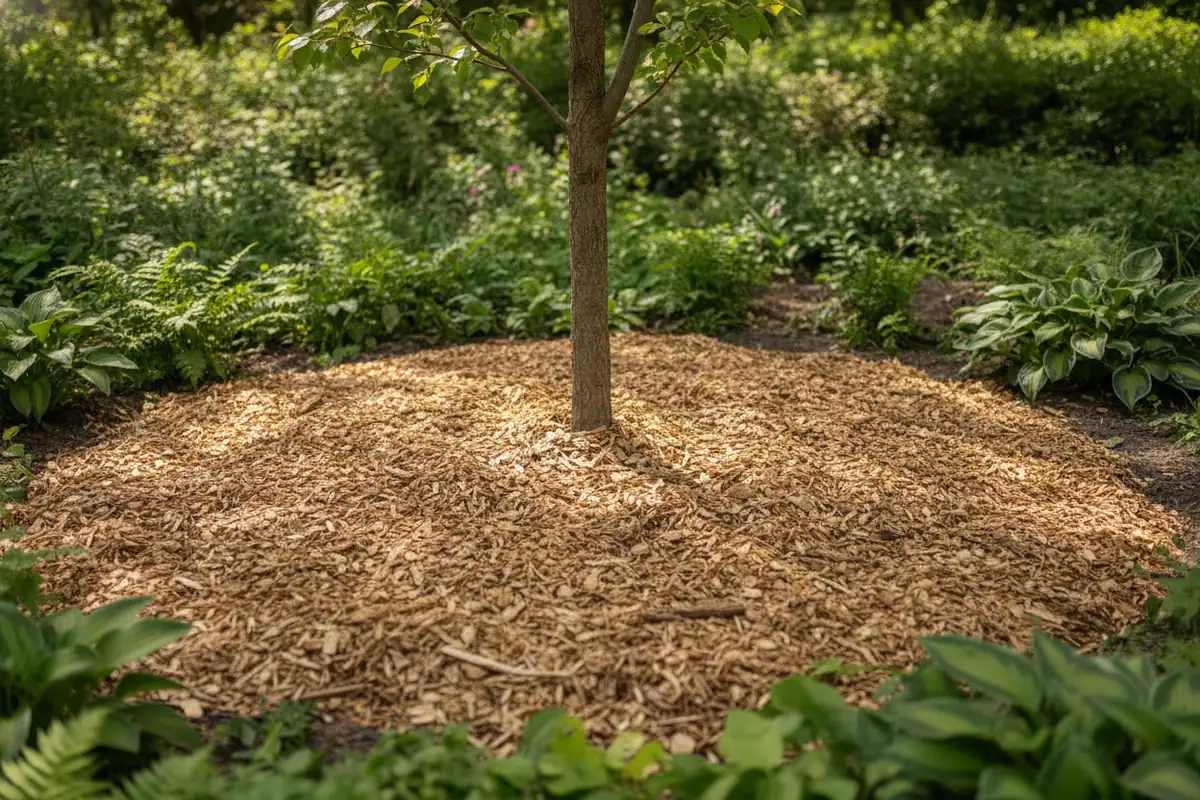
The classic use, and still the best, is mulch. A two to four inch layer of wood chips spread over a bed or around the base of a tree holds water, evens out soil temperature, and keeps weeds from sprouting. Clemson University horticulture recommends that two to four inch range for organic mulches and warns against piling it too high. Spread the chips in an even ring out toward the drip line, not a cone against the trunk.
That last point matters more than any other. Piling mulch up against bark, the mulch volcano you see all over the city, traps moisture against the trunk and invites rot, disease, and pests. Keep a few inches of bare space around every stem and trunk. Done right, a chip mulch ring is one of the kindest things you can do for a tree, which is why it pairs so well with regular pruning and tree care on the same plants.
Pro tip for small yards
Use coarser, chunkier chips around trees and shrubs where you want the mulch to last, and save finer, more broken-down chips for flower beds and vegetable borders where you want a tidier look and faster feeding. Sorting the pile as you spread it gets you two products from one delivery.
Soft Garden Paths and Play Areas
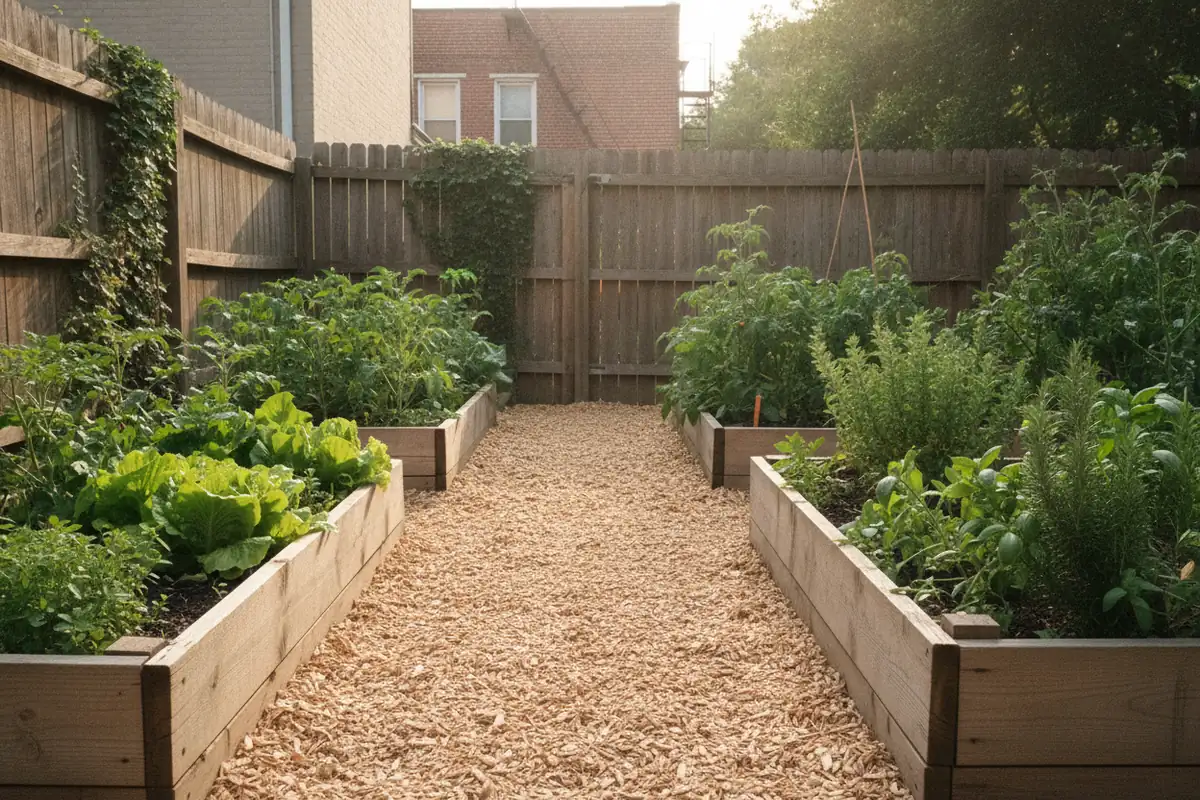
Wood chips make a forgiving, natural-looking path that is easy on the feet and easy on the budget. In a Brooklyn backyard, a chip path between raised beds or down the side of the house gives you clean footing in mud season without pouring concrete or laying pavers. Lay down a few sheets of cardboard or landscape fabric first to slow weeds, then top with three to four inches of chips and rake it level.
The same material works under a swing set or in a play corner, where a thick cushion of chips softens falls and keeps kids out of the mud. Top it up once a year as it settles and breaks down. Because chips are loose and draining, paths and play areas made from them dry out fast after city rain instead of holding puddles the way a hard surface can.
Weed Control Without Chemicals
If you hate weeding, and most city gardeners do, wood chips are your friend. A solid three to four inch layer blocks the light that weed seeds need to sprout, so you spend far less of your summer pulling things out of the cracks. The few weeds that do come through a chip layer pull out easily because the loose mulch keeps the soil soft underneath.
For the worst spots, layer cardboard or several sheets of newspaper under the chips. The paper smothers existing weeds while the chips hold it in place and hide it, and both break down into the soil over a season. It is a cheap, chemical-free way to reclaim a weedy strip along a fence or a neglected side yard without spraying anything near where kids and pets play.
People often ask: will chips bring weed seeds in?
Clean arborist chips from healthy tree work carry very few viable weed seeds, far fewer than open soil already holds. The thick layer you spread blocks far more weeds than the handful any chips might introduce. If you are worried, let a fresh pile sit and heat up for a few weeks before spreading, which kills most of what little is in there.
Compost, Soil Building, and More
Wood chips are a workhorse in the compost pile too. They are a carbon-rich brown material that balances out the wet green stuff like grass clippings and kitchen scraps, and they keep a pile from going slimy. the EPA home composting guide lists wood chips among the browns that keep a backyard pile aerated and working. Mix them in, or use a layer on top to cut down on smell and flies.
- Compost browns. Balance wet kitchen and yard waste, keep the pile airy, and cut odor.
- Slope and erosion control. A chip layer slows runoff on a sloped city lot and keeps soil from washing into the drain.
- Container and raised-bed mulch. A thin top layer keeps pots and beds from drying out on a hot rooftop or patio.
- Muddy gate and bin areas. Spread chips where foot traffic turns to mud, like by the trash bins or the back gate.
- Tree pits and street trees. A neat ring of chips in a tree pit holds water and protects roots from foot traffic.
None of these need fancy equipment or a big budget. They just need a pile of chips and a wheelbarrow, which is the whole appeal.
How to Get Wood Chips and Use Them Right
The simplest way to get a free load is to ask a tree company. Michigan State University Extension points out that crews are often happy to drop arborist chips for a homeowner rather than pay to dump them. Ask the team working on your block, or call a local tree service and ask to be put on their chip-drop list. Expect a full truckload dumped in one spot, so clear a corner of the driveway or yard before it arrives.
Once you have a pile, the rules are short: spread two to four inches, keep chips off trunks, stems, and wooden structures, and use thinner layers around tender vegetables. Beyond that, it is hard to go wrong. If a removal or pruning job in your yard is producing the chips in the first place, ask the crew about chipping and cleanup so the wood goes straight into your beds instead of onto a truck.
Please note: This article is general gardening information, not site-specific advice. How you use wood chips should suit your own plants, soil, and yard, and results vary. Keep mulch away from trunks, stems, and wooden structures, and use caution with chips from unknown sources near edible gardens. Dragonetti Tree Removal is not responsible for outcomes from actions taken based on this content.
Frequently asked questions
Sources and References
- Clemson University – Mulch fact sheet
- U.S. EPA – Composting at home
Ready to put a pile to work? Pick one or two uses to start, spread your chips two to four inches deep, keep them off the trunks, and let them do the rest. If you have tree or hedge work coming up in your Brooklyn yard, the chips can stay right where they fall and go straight into your garden. Dragonetti Tree Removal handles tree care, removals, and chipping across New York City. Contact us to talk about your trees and your wood chips in one visit.