
Where does the water go once the tree that used to soak up a share of it is gone? It is a fair question, and one worth asking before rather than after a large tree comes down, because removing a tree and drainage on the rest of the property are more connected than most homeowners expect. A single mature tree does real, measurable work with rainwater, and when that work stops, the water it used to handle has to go somewhere else. If you are weighing clearing a lot for a backyard project or taking out a specific tree, the drainage question is worth answering first.
This is not a reason to avoid removing a tree that needs to come out. Dead, hazardous, or badly placed trees usually create more problems than they solve by staying. It is a reason to go in with realistic expectations about what changes underground and above it, and a plan for the transition rather than a surprise six months later.
What a tree is doing to water before it comes out
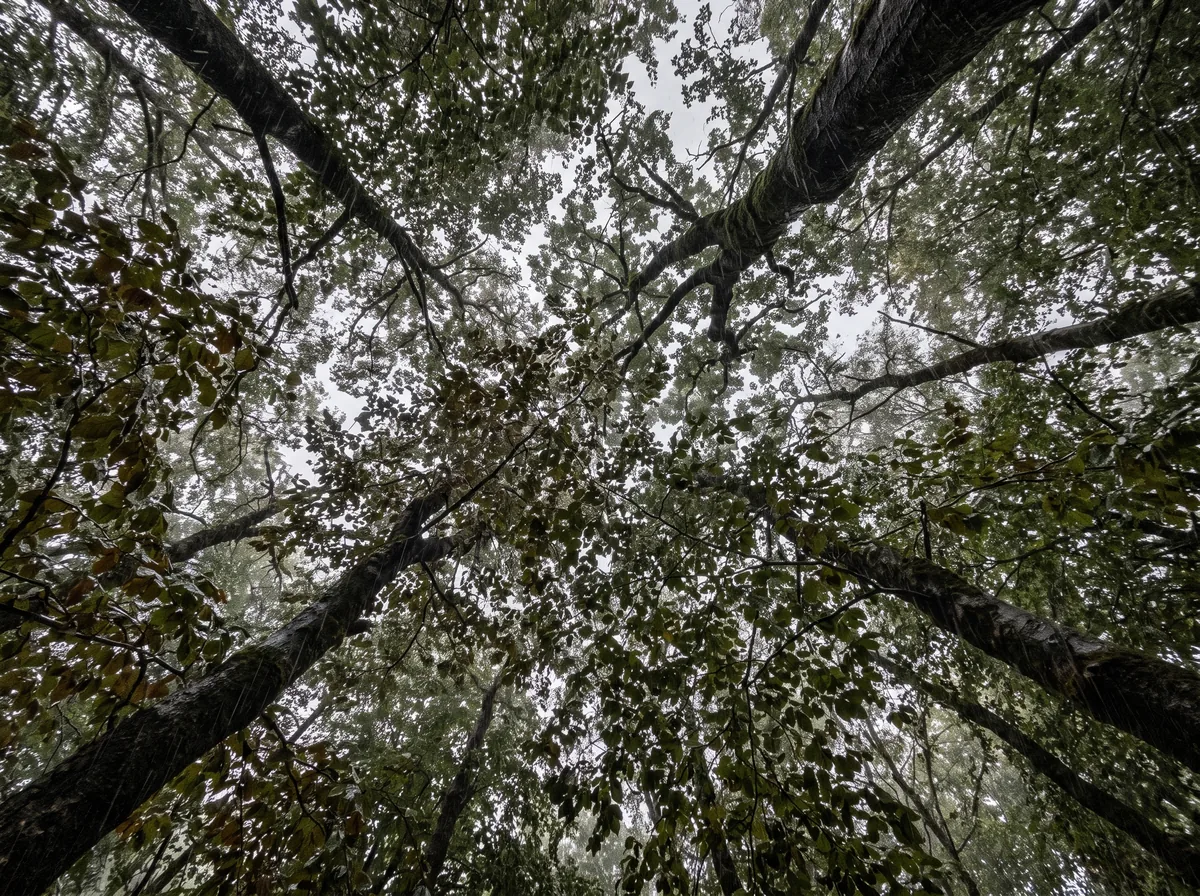
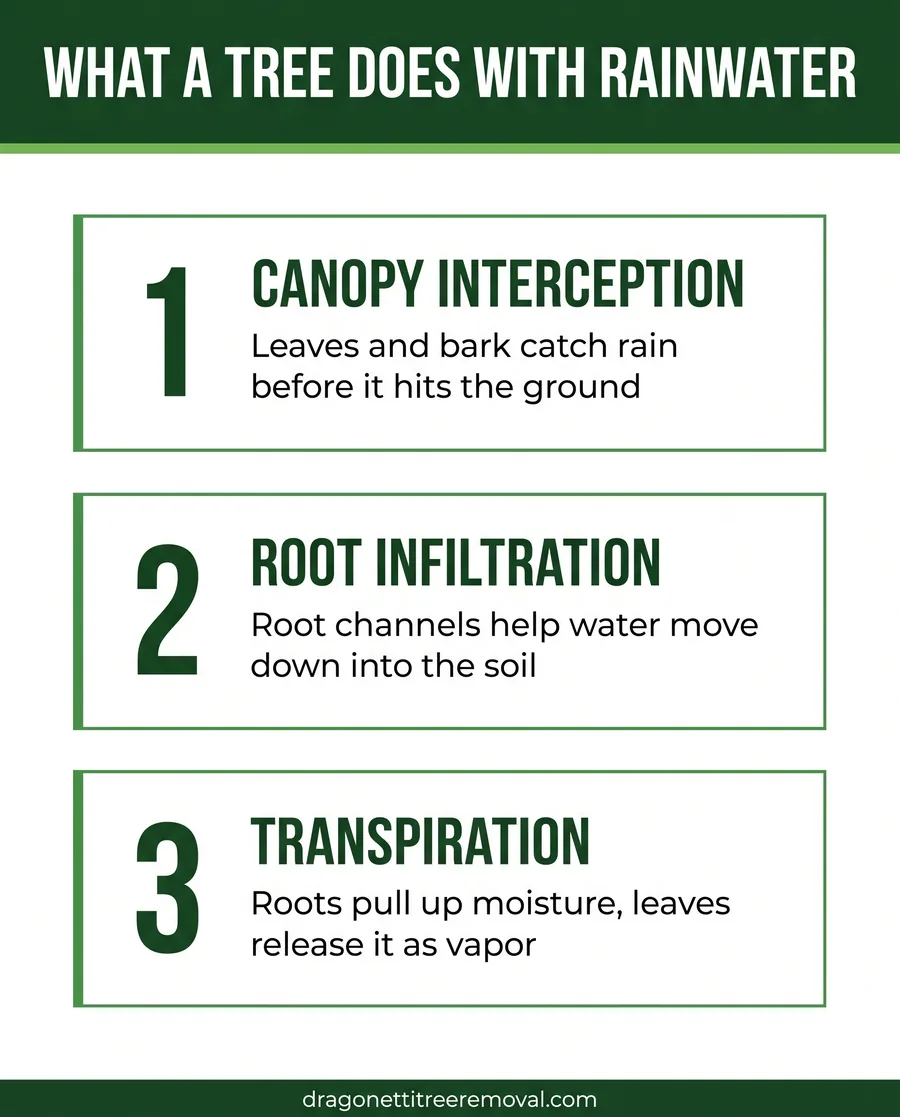
A mature tree affects rainwater in three separate ways, and it helps to think of them as three ingredients rather than one vague benefit. The canopy intercepts a portion of every rainfall before it ever reaches the ground, catching it on leaves and bark where much of it evaporates directly back into the air. The roots and the soil structure they build over decades let water infiltrate downward instead of running off across the surface. And the tree itself pulls a steady volume of groundwater up through its roots and releases it through its leaves as vapor, a process called transpiration that runs all season long.
According to a USDA Forest Service fact sheet on tree stormwater benefits, a single well established shade tree can intercept well over a thousand gallons of rainfall a year through its canopy alone, on top of what its roots help infiltrate into the soil. That is not a number most homeowners think about, because none of it is visible day to day. It only becomes obvious once the tree is gone and that share of the water has nowhere else built in to go.
Did you know
A large shade tree does not just shade a yard, it actively moves water. Between canopy interception, root infiltration, and the water it releases back into the air through its leaves, one mature tree does a meaningful share of the drainage work a property relies on without anyone noticing.
How removing a tree changes drainage on the rest of the yard
Removing a tree and drainage patterns on the rest of a property shift together, and once it is gone all three of those functions stop at once. Rain that used to be caught by the canopy now hits bare ground or grass directly and at full force. The root channels that helped water move downward gradually stop working as actively once the roots themselves die back, and heavy equipment used during a removal can compact the soil in the immediate area, which reduces how well it absorbs water going forward. And the steady daily draw of transpiration simply disappears, leaving more moisture in the soil for longer after each rain.
None of this means a yard will flood. Most properties adjust within a season or two as grass fills in and the soil settles. What it does mean is that a spot which drained fine with the tree in place can genuinely hold water differently once it is gone, and that difference is worth watching for rather than being surprised by.
Where the drainage change tends to show up first
The exact spot where the tree stood
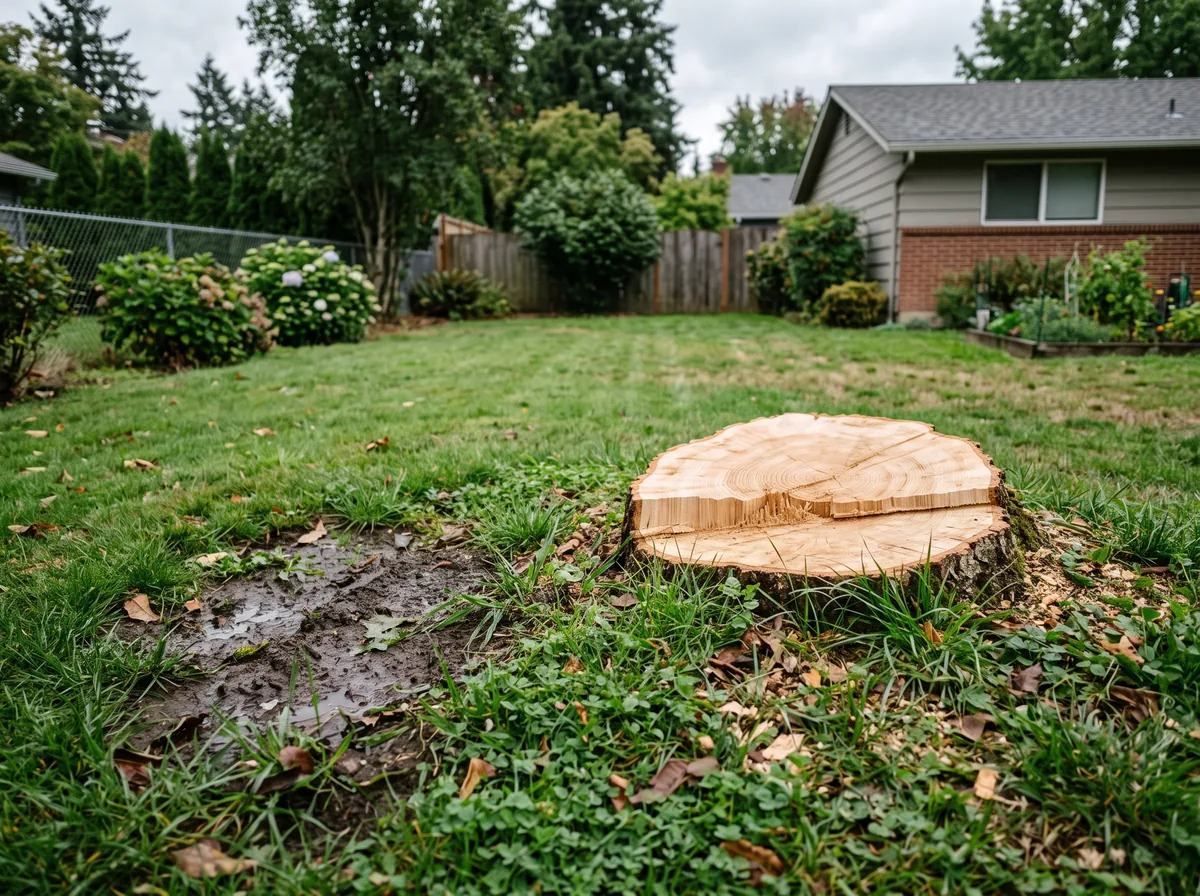
The area right around the old stump and root zone is usually the first place a difference appears, since that is where the most root activity and canopy coverage used to be concentrated. A patch that stays soft or holds a puddle longer than the rest of the lawn after a rain is common in the first year, especially if a stump and larger root sections are still in the ground.
Low corners and property lines
Water that used to be intercepted overhead now reaches the ground at full volume, and it follows whatever slope the property already has. A low corner, a spot along a fence line, or an area near a neighboring yard can start collecting more runoff than it used to, simply because less of that rain is being caught and released slowly the way it was before.
People often ask
Will taking out one tree really make a noticeable difference? For a young or small tree, usually not much. For a large, established shade tree that has been doing this work for decades, the change is often real enough to notice within the first year, particularly right around where it stood.
How to manage the transition after removal
Managing removing a tree and drainage as one project, not two separate ones, is the easiest way to avoid a surprise later. Grading the area lightly so water moves away from the house rather than pooling where the tree used to stand helps more than almost anything else in the first season. Overseeding the bare patch quickly gives new roots something to start doing part of the infiltration work again, even though it takes years for grass roots to match what a mature tree’s root system was doing.
If the removal is part of a larger project, regrading and reseeding are worth planning alongside the tree work itself rather than fixing one and then discovering the other needs attention a season later. And if the goal from the start was a full crew visit rather than a partial pruning job, raising the drainage question during that same visit means it gets planned for instead of noticed after the fact.
Good to know
Drainage responds differently on every property depending on soil type, slope, and how much of the tree’s root system is removed along with it. This article describes general patterns, not a prediction for your specific lot. A site visit is the only reliable way to know what to expect on your property.
Download the free quick guide
A printable guide to what to watch for in the months after a tree comes out, and the questions worth asking before the crew arrives.
Frequently asked questions
Does removing a tree affect drainage the same way regardless of its size?
Not usually. A young tree with a small canopy and a limited root system is doing far less interception and transpiration work than a mature shade tree, so removing one rarely produces a noticeable change. The drainage effects described here are mostly relevant to large, well established trees that have been part of a property’s water balance for many years, not a sapling or a recently planted tree.
How long does it take for a yard to adjust after a tree comes out?
Most properties settle into a new pattern within one to two growing seasons, as grass fills back in over the old root zone and takes over some of the infiltration work. Soil that was compacted by equipment during removal may take longer to loosen up naturally. How quickly things stabilize depends a lot on soil type, slope, and whether the area was regraded or reseeded soon after the tree was taken down.
Should the stump come out too, or does leaving it help drainage?
A stump left in the ground does not meaningfully replicate what the living tree was doing for water, since it is no longer pulling groundwater up through active roots. What it can do is leave compacted, uneven ground around it that is harder to grade properly. Most homeowners get a cleaner, more predictable result by having the stump ground out and the area leveled rather than leaving it in place.
Can regrading after a tree removal solve a drainage problem on its own?
Regrading helps direct where water goes once it reaches the ground, which is a real part of the picture, but it does not replace what canopy interception and root infiltration were doing before. A combination of light regrading, quick reseeding, and patience while new vegetation establishes itself tends to work better than expecting a single fix to solve everything at once.
Does this apply to trees removed near a neighbor’s property line?
Yes, and it is worth mentioning to a neighbor if a large shared or boundary tree is coming down, since runoff patterns do not stop at a property line. A tree that was intercepting rain for both yards will leave both sides adjusting, and a quick conversation before the work happens tends to avoid confusion about a wetter corner showing up later.
Removing a tree and drainage changes that follow do not have to be a guessing game. Before scheduling anything, it helps to walk the property with someone who can point out low spots, root spread, and grading ahead of time rather than after.
Dragonetti Tree Removal works across Brooklyn, Manhattan neighborhoods, and Staten Island. If you are planning a removal and want the drainage question answered before the crew shows up, request a quote from our tree crew and we will walk the site with you.