
Removing trees for renovation projects should be planned before the yard fills with materials, forms, scaffolding, or excavation work. If a tree sits where a patio, addition, driveway, garden wall, or backyard upgrade needs to go, start with a site review for tree removal service, stump planning, access, and permit questions before the construction schedule gets tight.
In NYC, the hard part is often not only the tree. It is the narrow gate, shared fence, row house yard, nearby roofline, sidewalk access, and the order of trades. A smart removal plan protects the project timeline and helps avoid doing the same yard work twice.
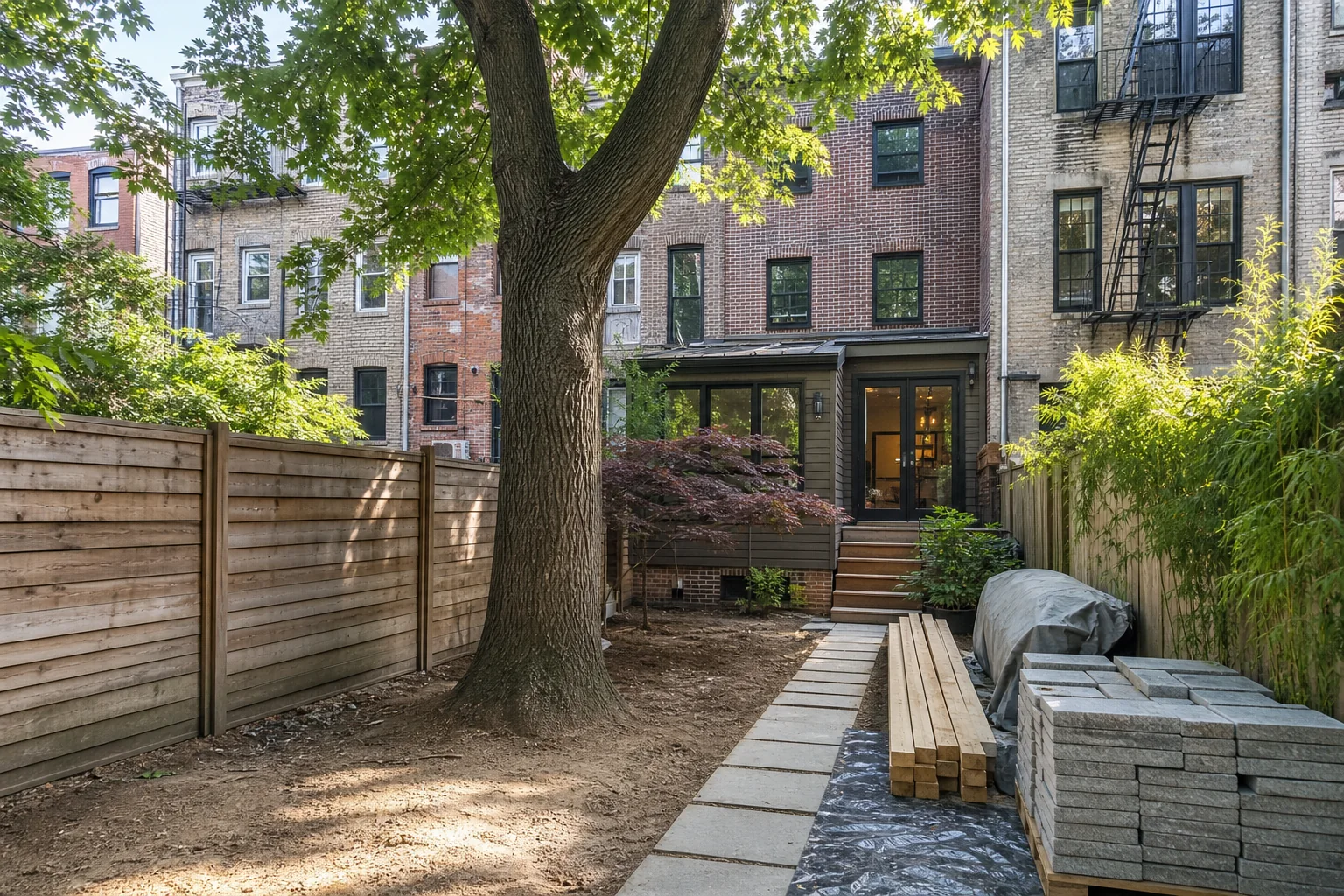
Why Plan Removal Before Renovation
A tree that feels like a yard issue in March can become a construction problem by May. Once materials arrive, access gets narrower. Once a patio base is installed, root and stump decisions become more expensive to fix. Once a fence is rebuilt, the crew route may change completely.
For small NYC yards, the best order is often tree review first, then stump or root-zone decisions, then grading, drainage, and hardscape work. If the project involves a large tree, a confined yard, or a shared boundary, a tree risk assessment may also help clarify whether pruning, removal, or a different build plan makes sense.
What to Review Before You Book
Before you ask for a removal date, collect the same details your contractor will care about. A better first conversation usually leads to a better work plan.
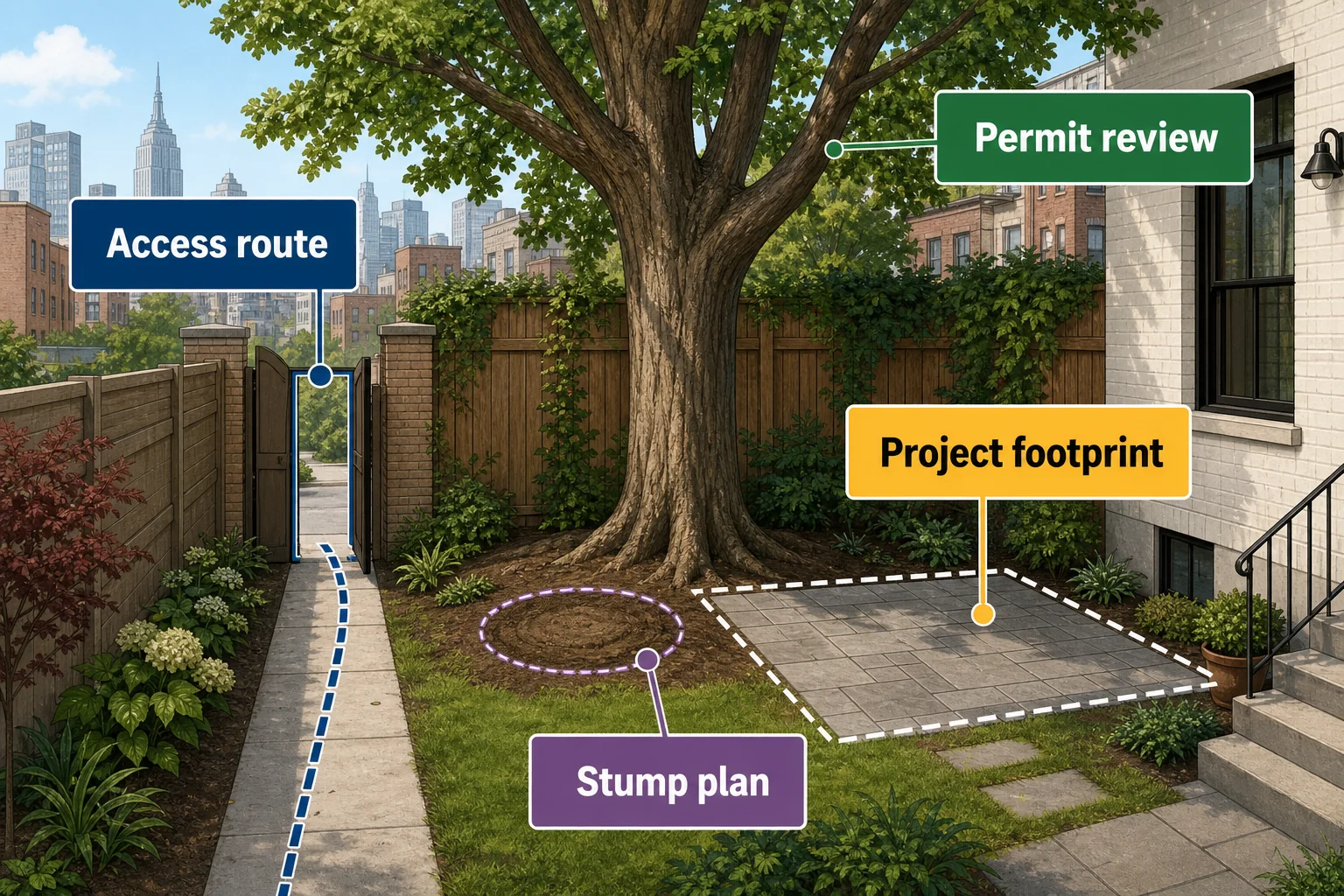
- Project footprint: where the patio, extension, shed, driveway, garden, or pool equipment will actually sit.
- Access route: gates, alleys, stairs, parking, shared driveways, and tight turns.
- Stump plan: whether the stump needs grinding, full removal, or temporary protection.
- Debris route: how wood, brush, chips, and equipment leave the property.
- Timing: when other trades need the space and when the yard must be clear.
Permit and Street Tree Questions
Private tree work and street tree work are not the same conversation. A tree inside a backyard is often handled as private property, but a curbside tree or sidewalk tree may involve city review. NYC Parks provides official information about tree work permits. Dragonetti can help you review what type of tree you are dealing with, but city agencies control approvals and timing.
If your renovation affects a front yard, sidewalk, driveway apron, or street tree area, ask about tree status early. Do not let a construction schedule assume a city-managed tree can be removed like a private backyard tree.
How Tree Work Affects the Rest of the Project
Tree removal can change grade, drainage, sunlight, and how the yard feels. A contractor may need a clear surface for pavers or footings. A planting crew may need chips removed before new beds go in. A fence installer may need the stump gone before posts are set. These details sound small until the next trade is standing there waiting.
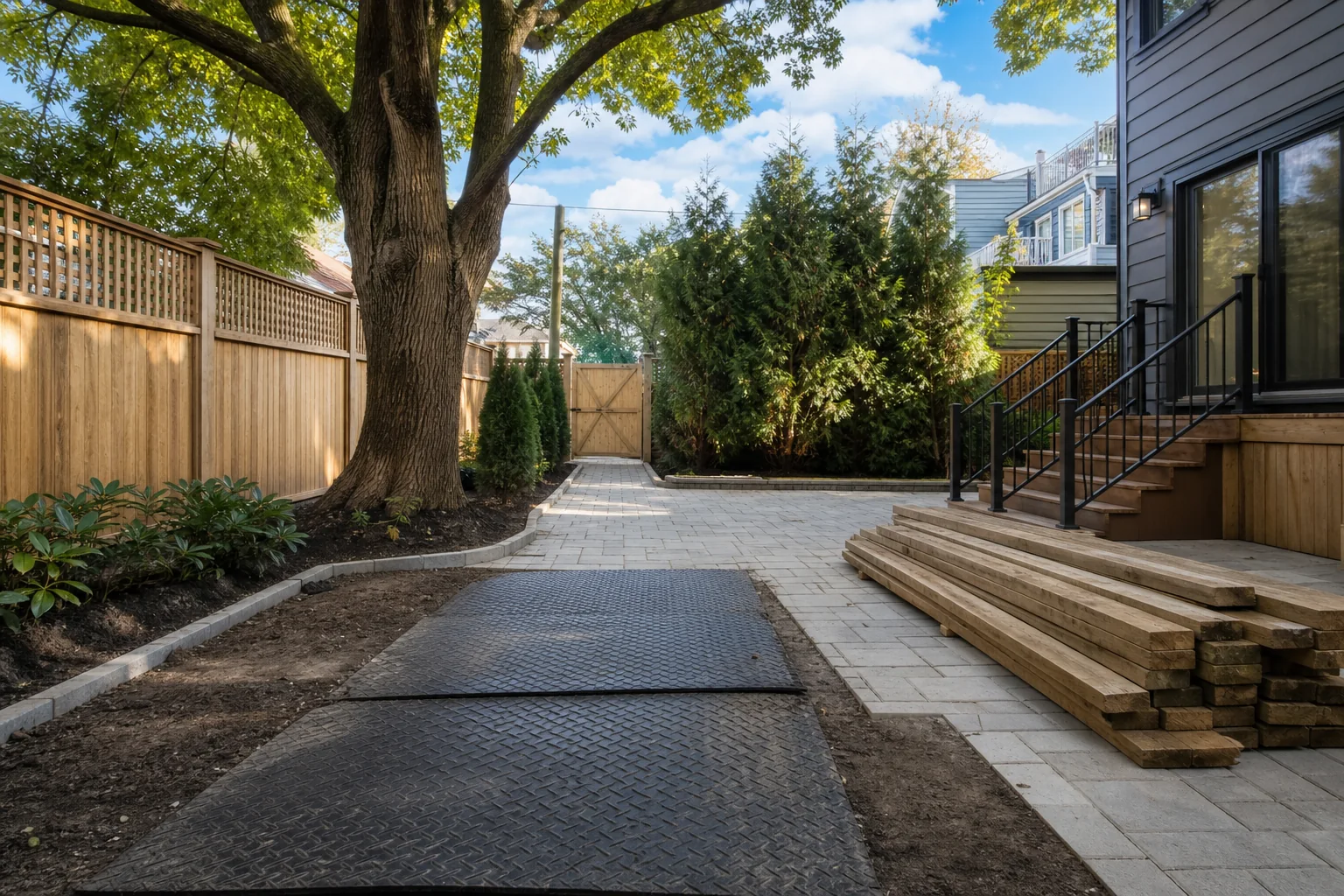
For backyard projects, ask whether stump removal should happen at the same time as the tree. If the future use of the space is not settled, tell the crew. The right answer for a garden bed may be different from the right answer for a paved patio.
If you are planning work in Brooklyn, Queens, Manhattan, or the Bronx, take wide photos from the street, the gate, the work area, and the back of the property. Dragonetti can use those photos to understand whether access, permit review, or a different sequence should be discussed before a date is booked.
FAQs
Usually, yes. Tree work is easier to plan before materials, scaffolding, patio forms, or excavation equipment crowd the yard.
It depends on the tree, property, and project. Dragonetti can help review the situation, but city agencies control permit rules and approvals.
Often, yes. If the future patio, deck, garden, or construction footprint crosses the stump area, stump removal should be planned before the next trade arrives.
They can. Roots, old stump material, and grade changes may affect pavers, drainage, and future planting plans.
Share the project footprint, access route, timing, fence plans, excavation plans, and any permit or inspection deadlines that may affect scheduling.
If your renovation depends on clearing a tree, do not wait until the yard is already under construction. Send photos, share the project footprint, and request a quote so Dragonetti can help plan the tree, stump, access, and cleanup steps in the right order.