
The cost of taking down a tree depends primarily on five crucial factors. These variables include the total height and trunk diameter, the physical accessibility of your property, the health of the wood, proximity to utility lines, and the specific cleanup requirements. You will generally pay a premium if the project requires specialized heavy machinery or if the crew must manually carry heavy logs out of a tight, fenced-in backyard.
Getting a tree felling estimate often leaves homeowners scratching their heads. You might wonder why your neighbor paid a few hundred dollars while your quote came back in the thousands.
Pricing this type of specialized labor is not a random guessing game. Professionals calculate the cost of taking down a tree using strict logistical metrics. Let us break down exactly what goes into your final bill.
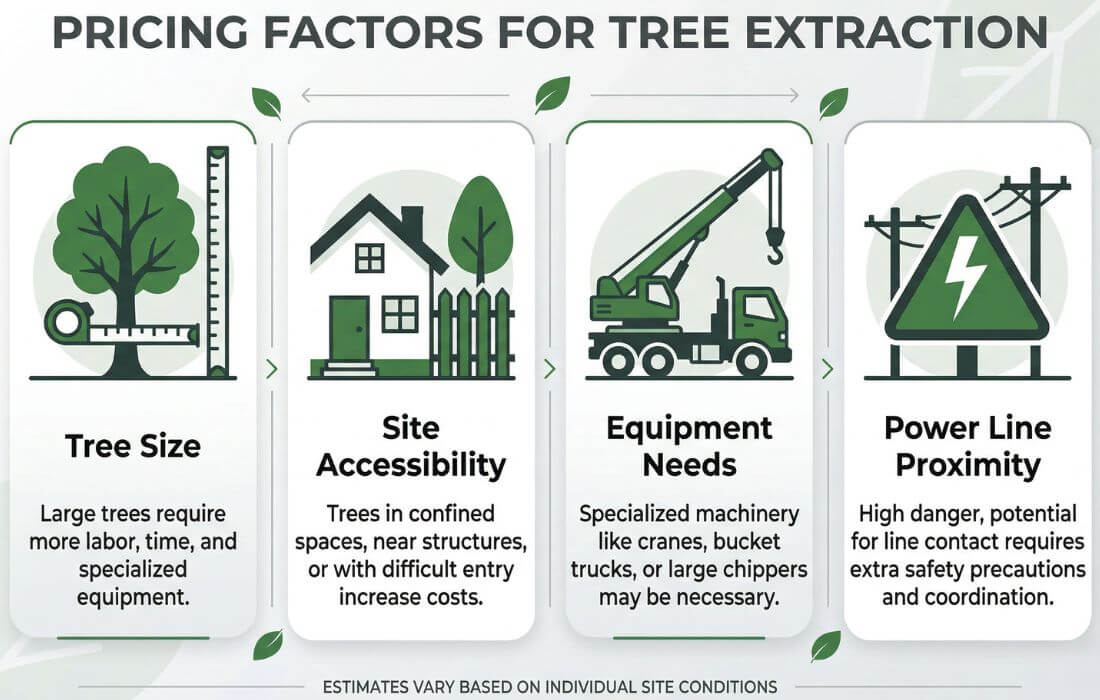
How Does the Height and Width of the Tree Affect the Final Price?
Size is the most obvious factor in determining tree clearing expenses. However, size does not just mean how tall the branches reach into the sky.
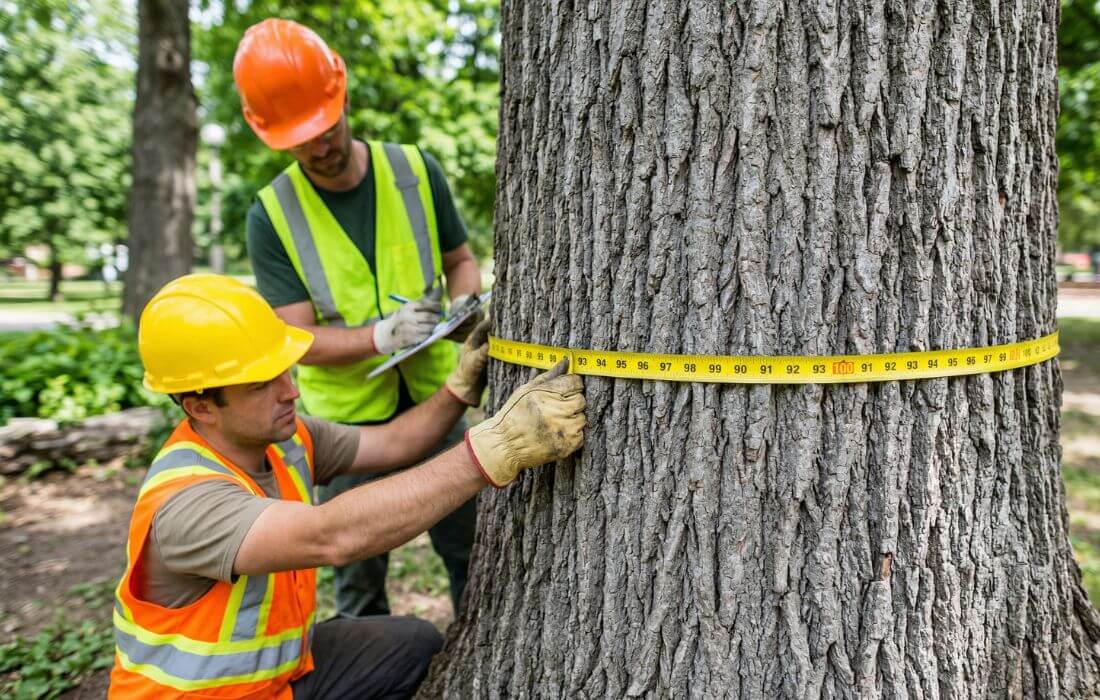
Arborists look at both the height and the diameter of the trunk (known as the DBH, or Diameter at Breast Height). A taller tree requires more cuts, more rope rigging, and more time suspended in the canopy.
A thicker trunk creates a massive amount of weight. To put this in perspective, freshly cut green red oak weighs over 60 pounds per cubic foot. A single 80-foot hardwood will generate literal tons of organic waste that the company must cut, load, and transport to a disposal facility.
- Small Trees (Under 30 feet): Usually require a single worker and can be brought down quickly.
- Medium Trees (30 to 60 feet): Require multiple crew members, climbing gear, and a commercial wood chipper.
- Large Trees (Over 60 feet): Demand heavy equipment, detailed drop-zone planning, and multiple days of labor.
Why Do Backyard Trees Cost More to Drop Than Front Yard Trees?
Your property layout heavily dictates the final cost of taking down a tree. An open front yard allows workers to drive their trucks and machinery right up to the work zone.
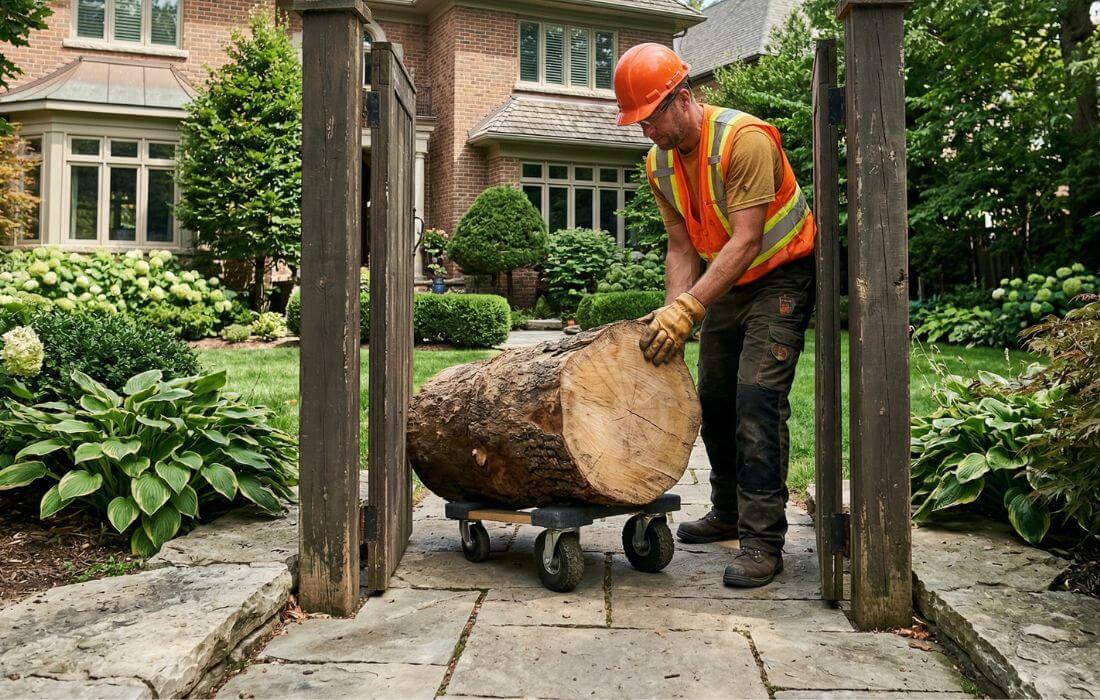
Backyards often present a logistical nightmare. If your yard has a narrow gate, a delicate flowerbed, or a newly poured patio, workers cannot use small skid steers to transport the wood. They have to do it by hand.
Manual labor drastically increases the time spent on the job. Moving thousands of pounds of wood by hand using dollies or sheer physical strength can turn a four-hour project into a two-day ordeal.
Here are the most common access hurdles that drive up professional tree extraction prices:
- Narrow alleyways between neighboring houses.
- Steep slopes or terraced landscaping.
- Fences that cannot be temporarily dismantled.
- Septic tanks or underground utilities blocking heavy machinery.
Does Proximity to Power Lines Increase Tree Clearing Expenses?
Working near active utility lines is incredibly dangerous and highly regulated. This proximity directly impacts the cost of taking down a tree.
Standard landscaping crews cannot legally or safely operate near high-voltage wires. Only certified line-clearance arborists have the training to take on this risk. The federal government sets strict safety standards for this line of work.
Workers must wear specialized dielectric gear to prevent electrocution. According to the Occupational Safety and Health Administration (OSHA) guidelines, specific minimum approach distances must be strictly maintained to ensure worker and public safety.
To avoid striking the wires, the crew must carefully tie off every single branch and lower it to the ground inches at a time. This meticulous rigging process is slow and requires immense skill.
Why Are Dead or Rotting Trees More Expensive to Extract?
It is a common myth that a dead, leafless trunk is cheaper to cut because there is less canopy to clean up. The reality is the exact opposite.
Healthy wood is flexible and predictable. Dead wood is brittle, compromised, and highly unstable. An arborist cannot safely use climbing spikes to scale a rotting trunk because the wood might crumble under their weight.
If the wood is too far gone, the crew must bring in a bucket truck or a crane to reach the top branches safely. Renting and operating heavy machinery instantly raises the baseline price.
If you are unexpectedly dealing with a hazardous trunk after a storm, the emergency dispatch fees will also reflect the immediate danger the compromised wood poses to your home. You can learn more about how we handle these urgent situations through our emergency dispatch services.
What Hidden Fees Should You Look For in a Tree Felling Estimate?
Transparency is key when comparing quotes. A remarkably cheap estimate usually means the contractor is leaving out essential steps of the cleanup process.
You need to ask specific questions about what happens after the trunk hits the ground. Some contractors will simply leave massive logs in your yard unless you pay a hidden disposal fee.
Here is a breakdown of services that are often billed as separate line items:
| Service Type | What It Includes | Impact on Price |
|---|---|---|
| Debris Hauling | Transporting all wood and brush to a specialized organic waste dump. | High (Factors in local dumping fees and fuel). |
| Stump Grinding | Using a machine to pulverize the underground root ball. | Moderate (Usually priced per inch of diameter). |
| Wood Chipping | Feeding branches into a chipper to create usable mulch. | Low (Often included, but you must ask). |
Many homeowners choose to finalize the job by grinding down the leftover stump. This prevents pest infestations and allows you to replant grass over the area. However, it requires a completely different piece of heavy machinery, which is why it is usually billed separately.
Making the Right Choice for Your Property
Understanding the actual cost of taking down a tree empowers you to make smart decisions for your property. You are not just paying for a person with a chainsaw. You are paying for liability insurance, specialized machinery, expert rigging, and peace of mind.
Always request a comprehensive, written estimate that details the hauling, chipping, and equipment fees. When you know the physics and logistics involved in managing heavy timber, the numbers finally begin to make sense.