Large branches hanging over your roof are not automatically a reason to take down the whole tree. The real issue is whether the branches are healthy, how close they are to the roof or gutter, and whether wind, rain, or snow could turn a small clearance problem into damage. Dragonetti can help with professional pruning, risk review, and safe planning when branches are too close to your home.
This is a better question than “Should the tree stay or go?” Most roof concerns start with one branch, one section of canopy, or one access problem. A focused review keeps the decision practical.
Why Branches Over A Roof Need Attention
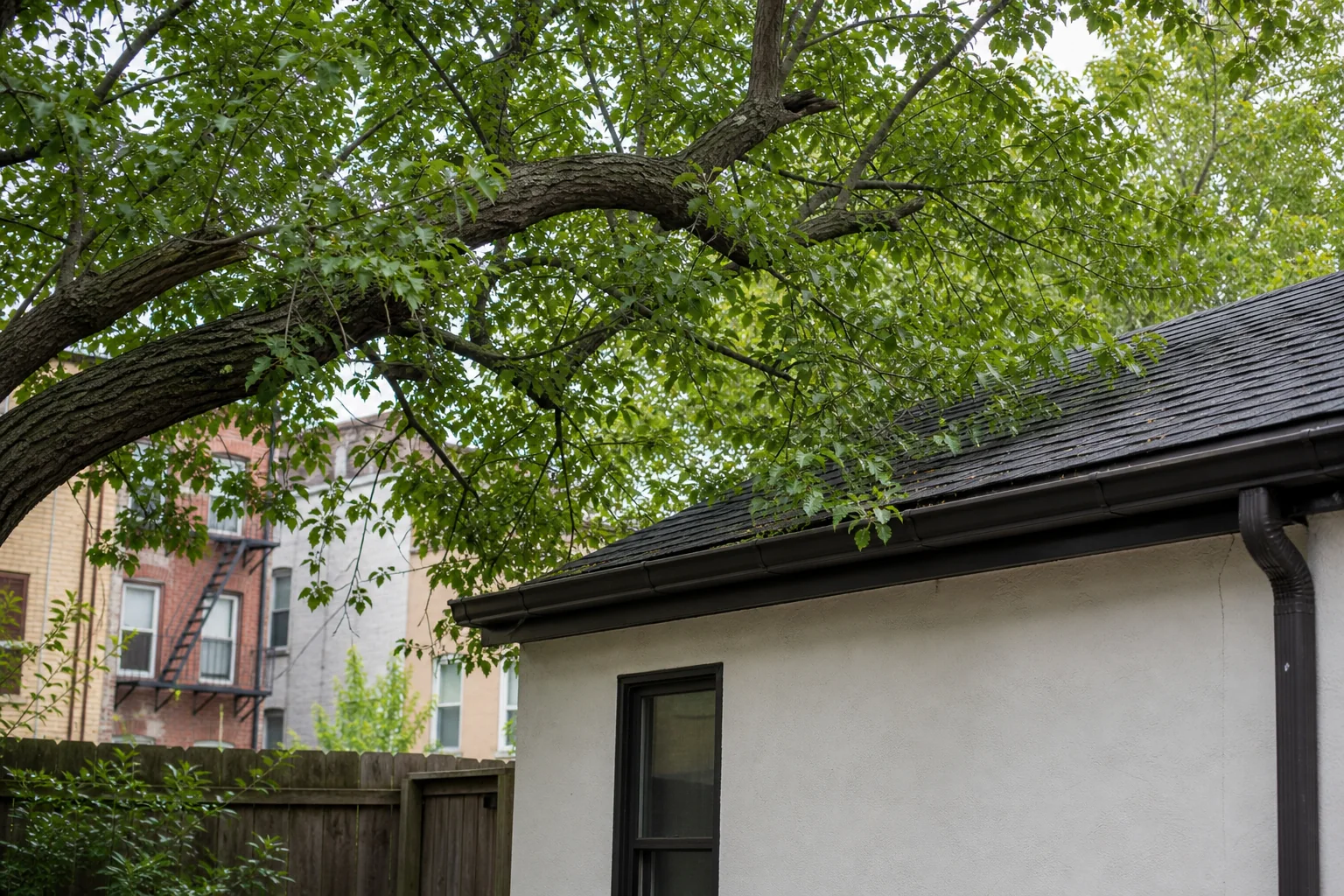
Branches over a roof can scrape shingles, fill gutters, hold moisture, drop deadwood, or become heavier during storms. In tight NYC backyards, the roof may also be the only open area under part of the canopy, which makes access and lowering work more important.
What The Branch Is Touching
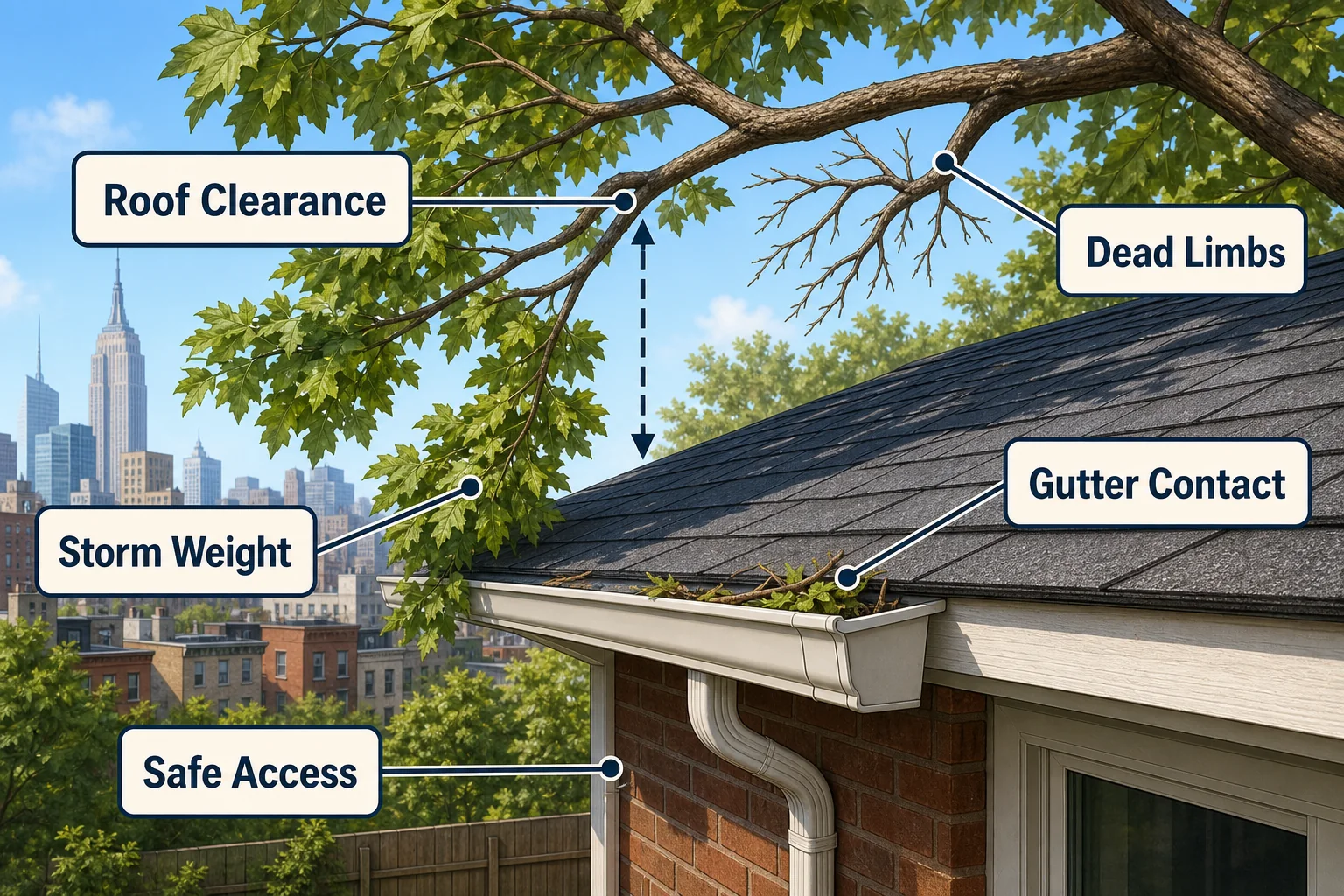
The next step depends on contact. Light leaf contact is different from heavy limb pressure. A branch resting on the gutter is different from a branch several feet above the roof. A dead limb over a bedroom or shared walkway deserves faster attention than a healthy leafy tip over an unused shed.
- Roof Clearance: Is there space between the branch and the roof surface?
- Dead Limbs: Are there dry, bare, cracked, or broken sections above the roof?
- Gutter Contact: Is the branch rubbing, pressing, or dropping debris into the gutter?
- Storm Weight: Could rain, wind, or snow pull the branch lower?
- Safe Access: Can the work area be reached without risky ladder work?
When Pruning May Be Enough
Selective pruning may solve the issue when the tree is healthy and the problem is limited to certain limbs. The goal is not to strip the canopy. The goal is to create practical clearance, reduce deadwood, and avoid cuts that make the tree weaker later.
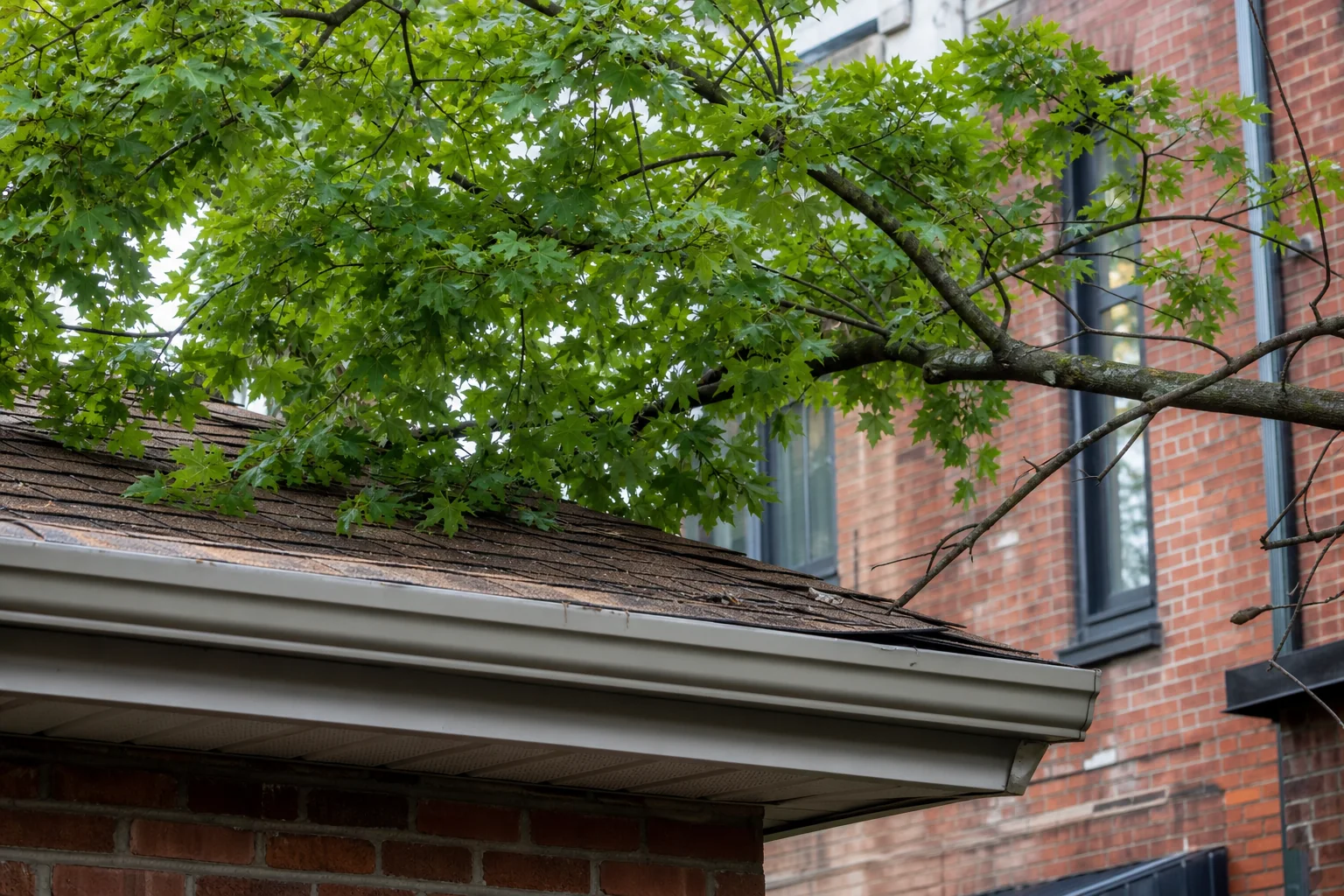
In many Brooklyn and Queens backyards, a careful plan matters because the branch may sit above a roof, fence, patio, or neighboring property at the same time. If access is tight, review the path from the street to the work area before a crew arrives.
When The Problem Is More Serious
The concern becomes bigger when the branch is cracked, hanging, dead, resting on the roof, or connected to a trunk with visible decay. A roof branch can also be a symptom of a larger structural issue if the tree is leaning, splitting, or losing major limbs.
If you see those signs, ask for a tree risk assessment. If a limb has already fallen, is moving, or creates immediate danger, see emergency tree service. Avoid climbing onto the roof or pulling branches yourself.
NYC Rooflines And Shared Walls Change The Plan
Rowhouses and brownstones in Brooklyn and Queens often share a wall, or sit close enough to a neighboring building that a single overhanging tree affects two roofs instead of one. If a branch crosses the property line and hangs over a neighbor’s roof rather than your own, the same boundary rule applies as with any overhanging branch: you can prune back to the property line, but you cannot go onto the neighbor’s roof or property to do it, and coordinating the cut with your neighbor beforehand avoids a dispute over debris or access.
Buildings with a co-op or condo board add another layer. If the tree in question is technically shared property, or the roof affected belongs to a unit you do not own, check with the board or management before authorizing pruning. Many boards already have a maintenance schedule that includes tree work, and duplicate authorizations can create confusion about who is responsible for the cost.
Flat roofs, common on many NYC rowhouses and apartment buildings, also change the risk calculation slightly. Debris and standing branches on a flat roof can block drains rather than just resting on shingles, and a clogged roof drain during a heavy rain event can back water up faster than it would on a sloped residential roof. If your building has a flat roof and a tree is dropping debris onto it regularly, treat the drains as part of the inspection, not just the branch itself.
One more detail worth checking before pruning starts: in landmarked historic districts, which cover parts of Brooklyn Heights, the West Village, and other older NYC neighborhoods, exterior work visible from the street can sometimes require sign-off beyond a standard permit. A tree hanging over a roof usually is not affected, but if scaffolding or equipment placement touches a landmarked facade, it is worth a quick call to confirm before work begins.
Keep Reading
- How Close Can A Tree Be To My House Or Fence?
- Tree Is Leaning
- What To Do If Your Tree Breaks In Half
- The Risks Of Keeping Deadwood During Winter
FAQs
No. Some overhang is normal, but dead limbs, gutter contact, heavy rubbing, and storm-weight concerns deserve a closer look.
Avoid climbing, ladder work, or cutting limbs over a roof yourself. The branch can swing, split, or damage the roof if it is handled incorrectly.
Often, yes. Selective pruning may improve clearance when the tree is otherwise healthy and the branch structure allows it.
It may be urgent if a large limb is cracked, hanging, resting on the roof, tangled with wires, or moving after storm damage.
Send one wide photo of the whole tree, one photo of the roofline, one close photo of the branch, and one photo showing access to the yard.
If branches are hanging over your roof, take photos from the yard and from a safe distance. Dragonetti can review the branch, the access, and the risk level so you can fix the actual issue without turning it into a bigger project than needed.