In this article
A hedge does not turn brown for one reason. It turns brown because something underground or inside the plant has gone wrong, and the brown leaves are just the last thing to show it. The usual suspects are bad watering, disease, pests, or winter and salt damage, and on a Brooklyn property you often get a mix of them at once. The good news is that most browning hedges can be read like a chart, and once you know what you are looking at, a round of professional hedge pruning or some soil work can often bring the row back.
This guide walks the four big causes in plain order, tells you how to tell them apart in your own yard, and shows what is worth saving versus what should come out. Start by checking the soil and scratching a branch before you reach for any product. That two-minute test tells you more than guessing ever will.
Why Hedges Brown Out
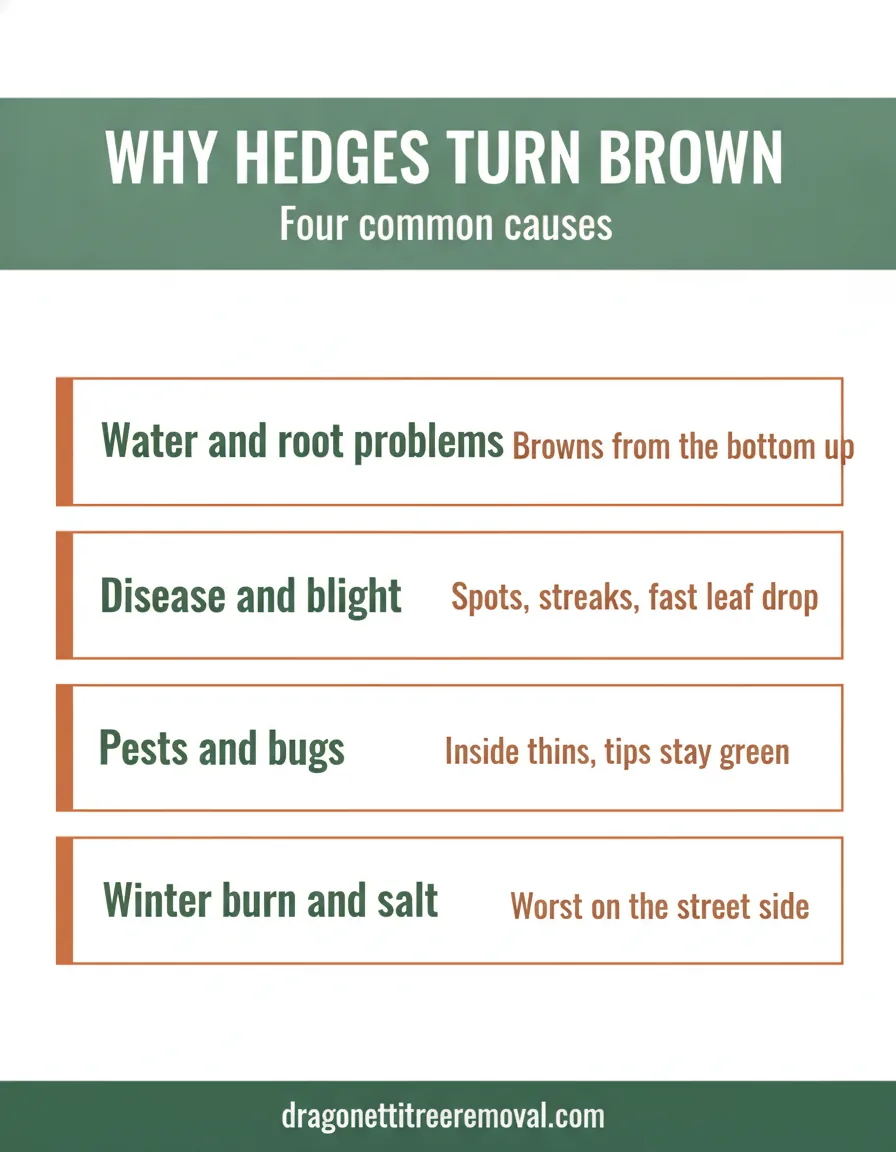
If you only have a minute, here is the short version. Lower browning that creeps up usually means a water or root problem. Sudden patches with leaf spots point to disease. Brown that hollows out the inside while the tips stay green often means pests. And browning that is worse on the street side after winter is almost always cold burn or road salt. Match the pattern to the cause, then act on that, not on the panic.
People often ask: should I just prune off the brown?
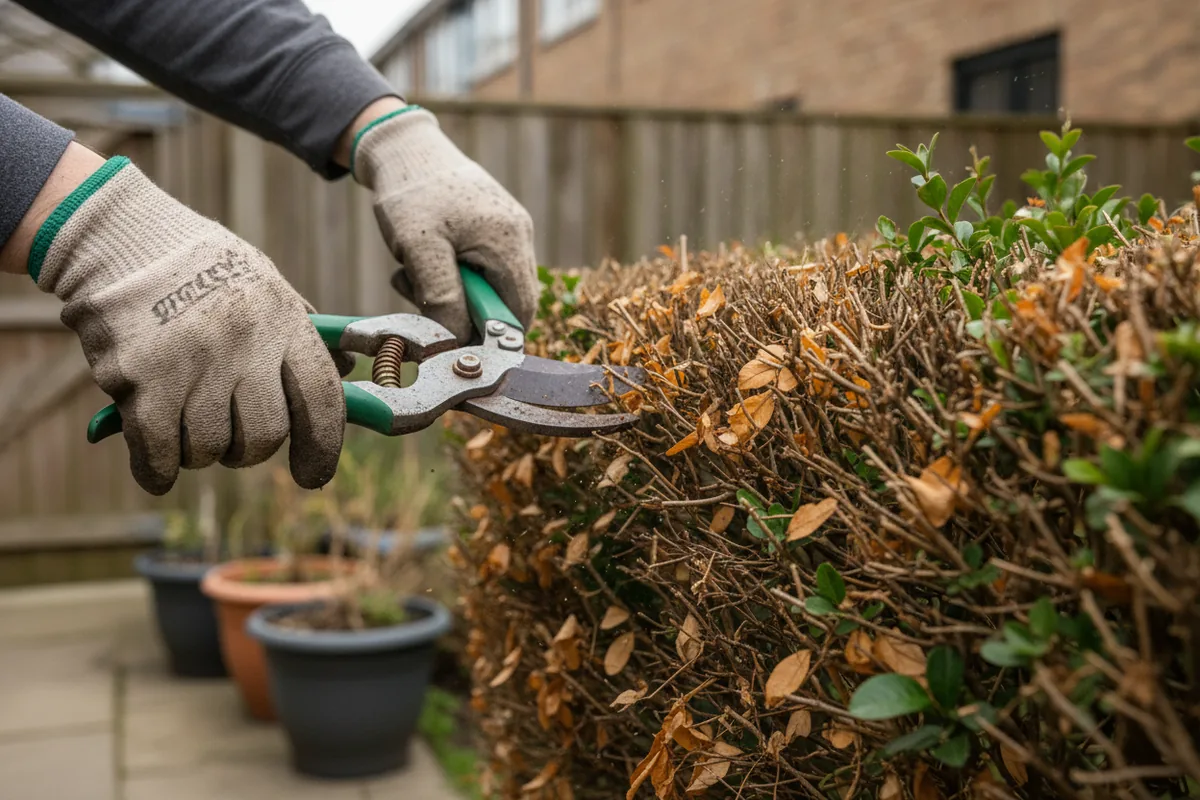
Cutting out dead growth helps the plant look better and stops some diseases from spreading, but it does nothing about the cause. If the soil is waterlogged or a borer is in the stems, fresh growth will brown out again. Fix the underlying issue first, then prune. Pruning is the cleanup step, not the cure.
Too Much or Too Little Water
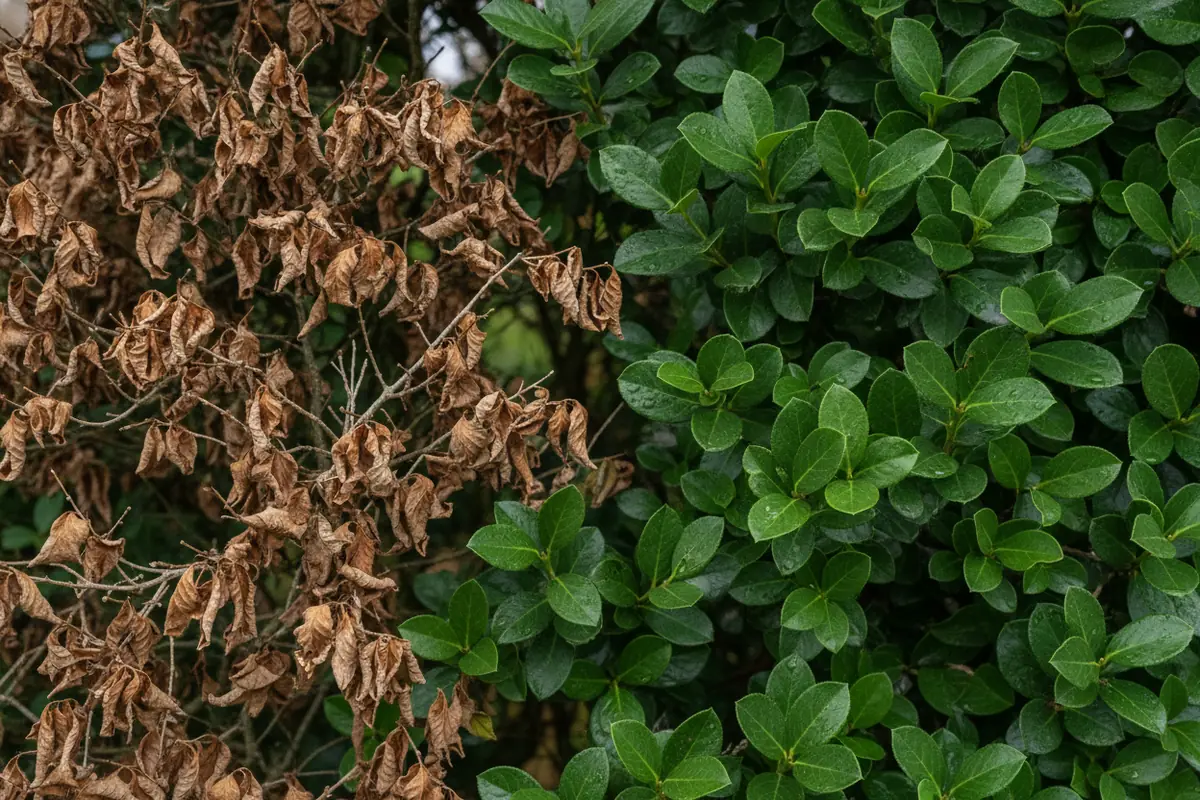
Water problems are the number one reason hedges in the city die, and they fool people because too much and too little can look almost identical from the curb. Both leave you with brown, crispy, or yellowing foliage. The difference is in the soil and the roots, so that is where you check.
Overwatering and poor drainage are common in Brooklyn backyards where the soil is heavy clay or where downspouts dump near the hedge. The roots sit in water, suffocate, and rot, and the lower branches brown first. Dig down a few inches: if the soil is soggy and smells sour, the hedge is drowning. Underwatering shows up in a dry NYC heat wave or on hedges in raised beds and along hot brick walls. The soil is dust-dry, the leaves curl and brown at the edges, and a long slow soak brings relief within a week if the roots are still alive.
Did you know?
A hedge planted too deep behaves like an overwatered one even in normal soil. When the root flare is buried under mulch or grade, the trunk stays wet and the roots cannot get air, so the plant browns from the inside. Pulling mulch back off the stems is one of the simplest fixes there is.
Disease and Blight, Including Boxwood
When browning shows up as spots, streaks, or fast leaf drop rather than a slow fade, you are likely looking at a fungal disease. The one that worries arborists most right now is boxwood blight, which is present in the New York region and can defoliate a boxwood in days. Clemson University horticulture describes the classic signs: dark leaf spots, black streaks on the stems, and rapid drop that leaves bare twigs behind.
Blight spreads on tools, gloves, and infected nursery stock, so a single bad plant can take out a whole row. Michigan State University Extension and the University of Wisconsin both stress sanitation: stop pruning a suspected plant, bag the fallen leaves instead of composting them, and disinfect anything that touched it. Other hedges have their own problems too, like the tip blights and root rots that hit arborvitae and yew. The pattern of the browning is your best clue to which one you have.
Disease is the moment to bring in help rather than experiment. A tree and shrub risk assessment confirms what you are dealing with and whether the affected plants can be treated, isolated, or need to come out before it moves down the line. Guessing wrong with a fungicide wastes money and lets the real problem keep spreading.
Pests and Bugs
If the outer tips of your hedge look fine but the inside is browning and thinning, suspect insects. Spider mites are tiny and easy to miss, but they suck the green out of needles and leaves and leave a dull, stippled, bronze-brown look, worst in hot dry weather. Bagworms hang little cone-shaped cases that strip evergreens fast. Borers tunnel into stems and cut off the flow of water, which kills whole branches above the entry point.
- Spider mites. Fine stippling and webbing, foliage looks dusty and dull, gets worse in heat. Tap a branch over white paper and watch for moving specks.
- Bagworms. Small hanging bags made of bits of foliage, rapid defoliation on arborvitae and juniper. Hand-pick early in the season.
- Borers. Single branches die back while the rest stays green, sometimes with small holes or sawdust at the base. Often a sign the plant was already stressed.
- Scale. Bumpy crusts on stems and a sticky film on leaves, slow decline and yellowing over a season.
Pests almost always pile onto a hedge that is already weak from drought, crowding, or poor pruning, so treating the bug alone is half the job. Healthy, well-watered, well-pruned hedges shrug off most of these.
Winter Burn and Road Salt
Evergreen hedges in New York take a beating between December and March, and the damage often does not show until spring. the Arbor Day Foundation explains winter burn well: the foliage keeps losing moisture in cold wind while the frozen ground stops the roots from refilling it, so the leaves dry out and turn brown, scorched, or rusty, usually worst on the windward side.
Road salt makes it worse on city hedges. Salt spray from plowed streets and salted sidewalks lands on the foliage and soaks into the root zone, burning both. The giveaway is browning that is heaviest on the side facing the street. You can head most of it off by watering deeply before the ground freezes, rinsing salt off the foliage in early spring, and screening exposed curbside hedges through the winter.
Pro tip for Brooklyn yards
If your hedge runs along the sidewalk or driveway, flush the root zone with plenty of plain water in early spring to push winter salt down past the roots. Do it before new growth starts. One good soak can be the difference between a hedge that greens up and one that keeps browning all season.
How to Revive a Dying Hedge
Before you tear anything out, run the test. Scratch the bark on a few brown branches: green or cream under the surface means the wood is alive and worth saving, brown and brittle means that branch is gone. If most of the plant scratches green, you have a recovery on your hands, not a removal. Fix the cause first, water deeply and evenly, pull mulch off the stems, and then prune out the clearly dead wood with clean tools.
Some hedges are past saving, and trying to nurse a dead row along just feeds disease and pests into the healthy plants beside it. When several plants are fully brown and brittle, or blight has taken hold, professional hedge and tree care that includes clean removal and replanting is usually the smarter spend. If you want a second opinion before you decide, that is exactly the kind of call worth making early.
Please note: This article is general gardening and tree-care information, not a diagnosis of your specific hedge. Plant problems vary by species, site, and season, and look-alike symptoms can have very different causes. Dragonetti Tree Removal is not responsible for outcomes from actions taken based on this content. For browning that is spreading or severe, have the hedge inspected in person by a qualified arborist before treating or removing it.
Download the free quick guide
Save this as a PDF to keep on hand.
Browning Hedge Diagnostic Checklist (PDF)Frequently asked questions
Sources and References
- Clemson University – Boxwood diseases and insect pests
- Michigan State University Extension – Boxwood blight overview
- University of Wisconsin Horticulture – Boxwood blight fact sheet
- Arbor Day Foundation – Tree and shrub health