
In this article
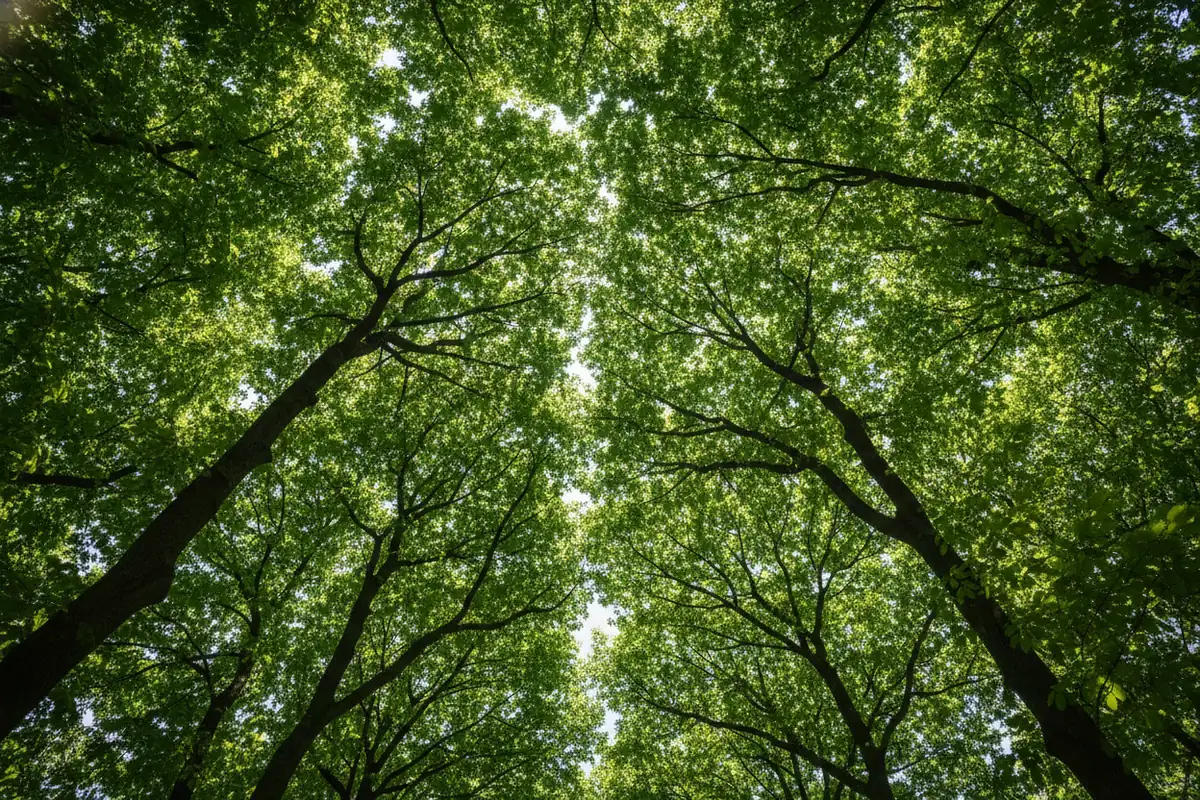
On a 90-degree afternoon, the air under a healthy street tree can read 10 to 15 degrees cooler than the sidewalk a few feet away. That gap is not just shade. The tree is actively cooling the air around it, and the way it does that is closer to sweating than most people realize. If you have ever wondered how trees cool themselves, the short answer is the same trick your own body uses, scaled up to something that can move hundreds of litres of water in a day. Keeping that engine running is a big part of what good tree care and maintenance protects.
Here are ten facts that explain the science, and why a block lined with well-kept trees feels so different from a bare one in a New York summer.
The short answer: Trees Sweat
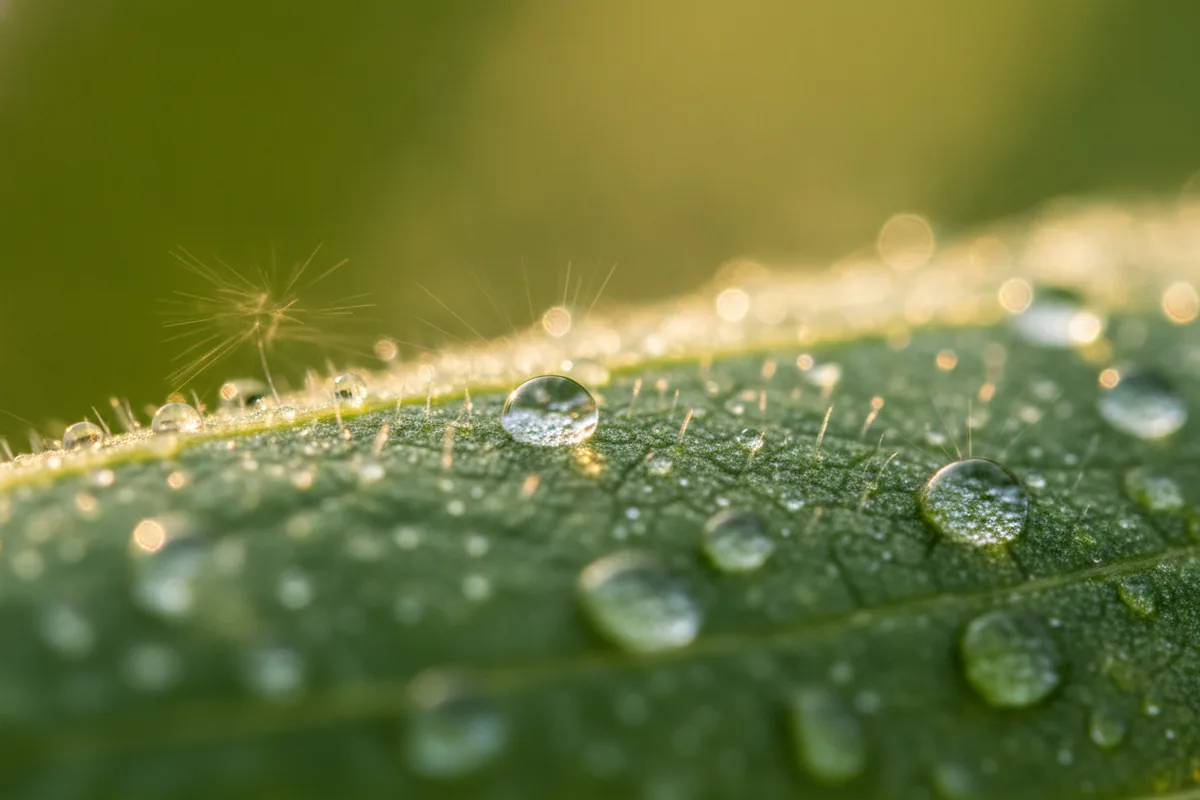
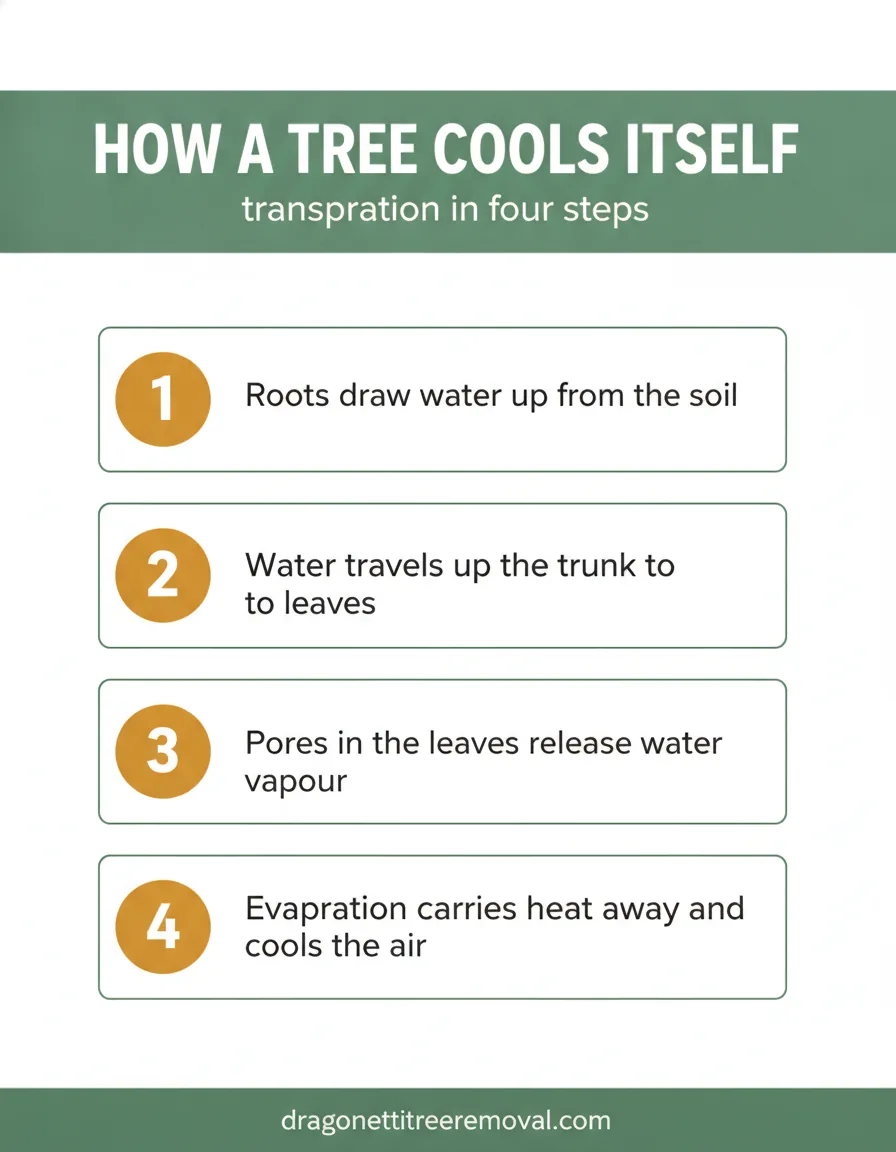
Fact 1: That’s right. Trees release water through tiny pores called stomata. The underside of every leaf is dotted with microscopic openings. They take in the carbon dioxide a tree needs and, in the same breath, let water vapour escape. That release is called transpiration, and it is the foundation of how a tree cools itself.
Fact 2: Evaporation is what does the cooling. When water turns from liquid into vapour at the leaf surface, it carries heat away with it. It is the exact same physics that makes your skin feel cold when sweat dries in a breeze. A leaf in full sun stays far cooler than a dark roof shingle next to it, because the shingle has no way to sweat.
Did you know?
A single large, healthy tree can have several hundred thousand leaves, and the combined cooling effect of all that evaporation has been compared to running multiple room air conditioners for the better part of a day, at no cost and no electricity.
How Much Water a Tree Actually Moves
Fact 3: A mature tree can move hundreds of litres of water on a hot day. Water is pulled up from the roots, through the trunk, and out the leaves in a continuous column. On a still, humid New York afternoon that flow slows down. On a hot, breezy one it accelerates, and so does the cooling.
Fact 4: Almost all the water a tree drinks is used for cooling, not growth. Only a small fraction of what the roots absorb ends up building wood and leaves. The overwhelming majority passes straight through and evaporates. In other words, a tree spends most of its water budget on climate control.
Fact 5: The bigger the canopy, the bigger the effect. Cooling scales with leaf area. A broad, full crown sweats far more than a thin or storm-damaged one, which is one reason a neglected tree cools its surroundings less even when it is still alive.
People often ask: do trees still cool the air at night?
Mostly no. Stomata on most trees close after dark, so transpiration nearly stops. The cooling you feel on a summer evening under a tree at that hour is mostly shade and the slow release of heat the canopy blocked during the day, rather than active sweating. The real cooling work happens while the sun is up.
Why a Shaded Street Feels Cooler
Fact 6: Trees fight the urban heat island. Pavement, brick, and rooftops soak up sun and radiate it back for hours, which is why a dense block can run several degrees hotter than a leafy one. A canopy intercepts that sunlight before it ever reaches the hard surfaces, then layers evaporative cooling on top. The EPA points to trees and vegetation as one of the most effective tools for reducing urban heat island effects in cities like New York.
Fact 7: Shade and sweat work together. Shade alone cuts the heat hitting a surface. Transpiration cools the air that moves through and past the canopy. A street with mature trees gets both at once, which is why the temperature drop feels so much larger than stepping under a building awning.
Fact 8: The cooling reaches past the tree itself. Cooler, slightly more humid air under a canopy drifts into nearby yards and ground-floor rooms. A well-placed shade tree on the south or west side of a home can take a real bite out of summer cooling costs, which is shade and transpiration paying you back directly.
Save your money
Strategically placed shade trees can reduce a home’s summer cooling demand noticeably. Before you remove a healthy shade tree for convenience, weigh what it is saving you every July and August. Pruning to keep it safe is almost always cheaper than losing the cooling and paying it back on your energy bill.
What Keeps Your Trees Cooling You
Fact 9: A stressed tree cools less. When a tree runs short on water, it closes its stomata to survive, and cooling drops with it. Drought, compacted soil, and cut roots all push a tree toward that defensive mode. A tree that looks fine can still be sweating far below its potential if its roots are struggling.
Fact 10: Healthy structure keeps the canopy full. A dense, well-pruned crown has the leaf area to cool effectively and the strength to survive a storm with that canopy intact. Thoughtful structural pruning for young and mature trees and an honest tree risk assessment are how you keep a tree both safe and working as a cooler. If a tree is too far gone to recover, replacing it with a sturdy shade species keeps the benefit going for the next generation on the block.
Across our Manhattan service area and the rest of the city, the trees doing the most cooling are almost always the ones someone has bothered to maintain.
FAQs
Is transpiration the same as a tree sweating?
It is the closest everyday comparison. Sweating cools your body when perspiration evaporates from your skin and carries heat away. Transpiration cools a tree when water evaporates from pores in its leaves and carries heat away in the same way. The big difference is purpose and scale: you sweat mainly to regulate temperature, while a tree moves water primarily to pull nutrients up from the roots and run photosynthesis, with cooling as a powerful side effect. The physics of evaporative cooling, though, is identical.
How much can a tree cool the air around it?
On a hot day the air beneath and immediately around a healthy, full canopy can sit roughly 10 to 15 degrees cooler than nearby pavement in direct sun. The exact figure depends on the tree’s size, how much water it has access to, humidity, and wind. A large tree with a dense crown and moist soil cools dramatically more than a small or drought-stressed one. The effect is strongest at midday when the sun is most intense and the tree is transpiring hardest.
Do all trees cool equally well?
No. Cooling tracks leaf area and water availability, so a broad, dense canopy outperforms a thin or damaged one. Species with large leaves and full crowns generally move more water and provide more shade. A tree that has lost branches to storms, is fighting disease, or sits in compacted, dry soil will cool far below its potential even if it is still standing. This is exactly why canopy health and pruning matter for the cooling benefit, not just for safety.
Should I remove a big tree because it drops debris, even though it cools my yard?
Not without weighing what you would lose. A mature shade tree provides cooling that is genuinely hard to replace, and removal is permanent. Many trees that feel like a nuisance can be managed with pruning, cleanup scheduling, or targeted work rather than removal. Get an arborist to assess the tree first. If it is healthy and structurally sound, keeping it is usually the better call. If it is hazardous or declining, plan a removal and replant a strong shade species to keep the benefit on your property.
Quick recap
Trees cool themselves and your block by sweating water out through their leaves, where it evaporates and pulls heat away. A bigger, healthier canopy cools more, a stressed one cools less, and a shaded street can run well over ten degrees cooler than bare pavement. Protecting that canopy with pruning and honest assessment keeps the cooling working for years.