
Last updated: July 2026
In This Article
A nor’easter drops a 60-foot oak onto your Brooklyn brownstone at 2 a.m. By morning you have a hole in your roof, a crushed fence, and an insurance company asking questions you are not ready to answer. Storm-damaged trees and homeowners insurance is one of the most misunderstood intersections in home ownership, and in NYC, where lots are tight, trees are old, and storms are getting more severe, the stakes are high. Here is how the coverage actually works, what catches homeowners off guard, and how to handle a claim without leaving money on the table. Our Brooklyn and Queens arborists respond to these situations daily and sees the same insurance pitfalls repeatedly.
When Your Homeowners Insurance Actually Applies
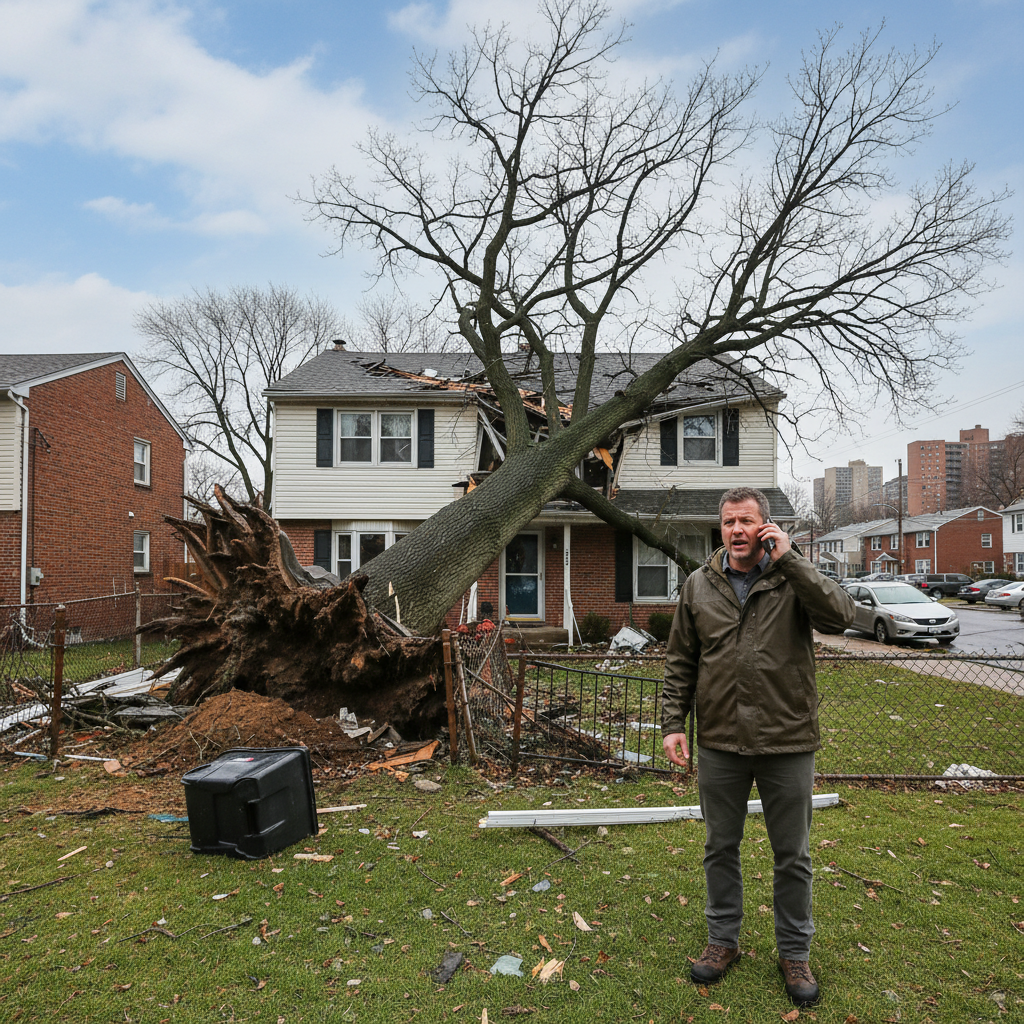
Standard homeowners policies cover storm damage as a covered peril. If wind, lightning, ice, or a severe storm causes a tree to fall and it hits your house, garage, fence, or other insured structure, your dwelling coverage kicks in. That applies whether the tree is yours, your neighbor’s, or one that belongs to nobody in particular.
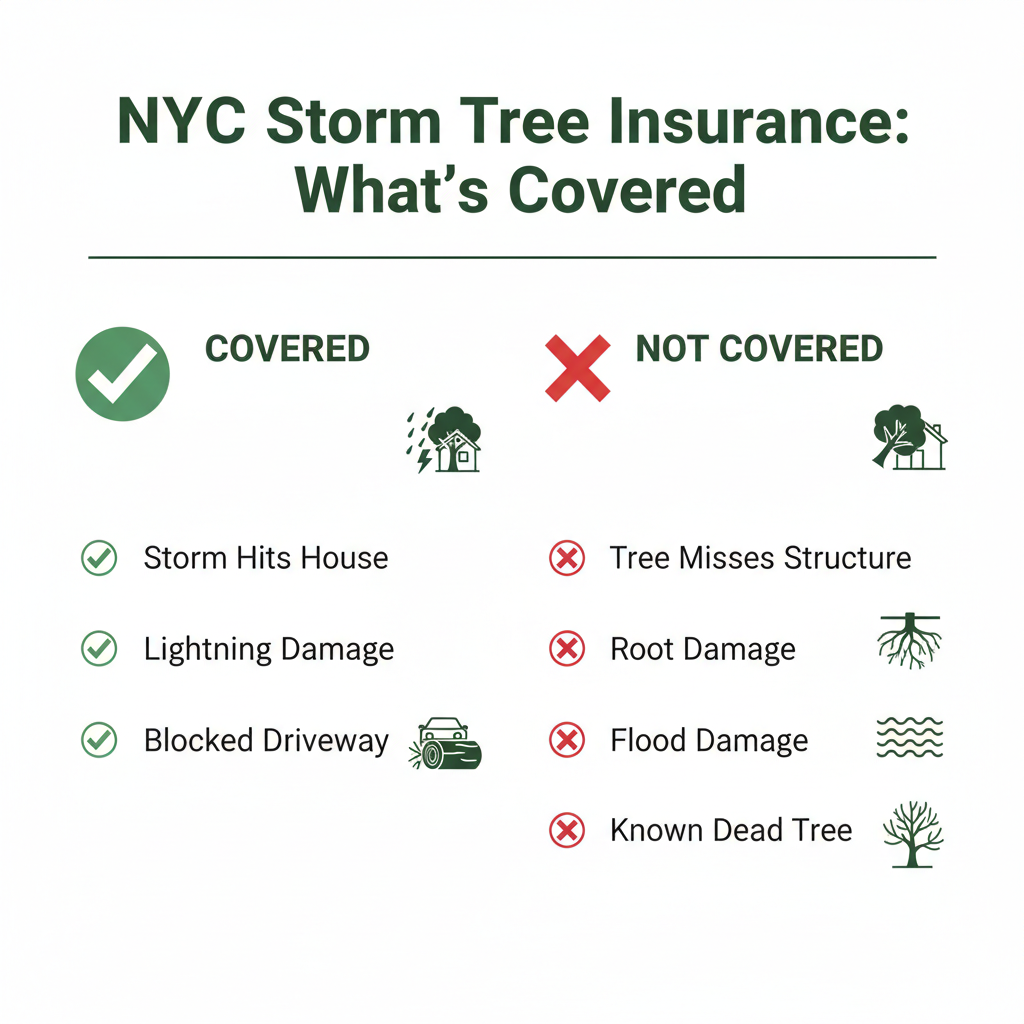
The key phrase is “hits an insured structure.” A tree that falls into your yard, misses everything, and sits on the grass? You are on your own for removal costs. A tree that lands on your roof, breaks through a wall, or crushes your detached garage, that is a covered event. Your insurance should pay for both the structural repairs and the cost of removing the tree from your property.
Most NYC homeowners are covered for:
- Roof, wall, or ceiling damage from a fallen tree
- Damage to detached structures like garages, sheds, and fences
- Interior damage caused by the breach (water, debris)
- Tree removal from the structure it damaged (up to policy limits)
- Debris removal from blocked driveways or accessibility ramps
One thing most people miss: if a tree falls and blocks your only driveway, even if it does not hit a structure, many policies will cover removal costs. Check your declarations page for this language.
Quick check: Pull out your homeowners policy and look for “covered perils” and “debris removal.” Those two sections tell you 90% of what you need to know. If you are renting and carry renters insurance, you are only covered for damage to your personal property, not the structure itself. That falls on your landlord.
What Your Policy Almost Certainly Will Not Cover
This is where NYC homeowners get burned. The exclusions are specific and insurers enforce them.
Dead or diseased trees you knew about. If you had a standing dead tree on your property, your neighbors complained about it, and it finally fell during a storm, your insurer will likely deny the claim. Dead trees are a foreseeable hazard, not a sudden covered peril. In New York, both insurers and courts take the position that a property owner who knew, or should have known, a tree was hazardous and failed to remove it bears responsibility for the resulting damage. This argument comes up on nearly every job involving a tree that was clearly dead or declining for years before the fall.
Tree removal when nothing was hit. If a storm knocks a healthy tree into your yard and it sits there harmlessly, most policies will not pay for removal. The standard clause: removal is covered if the tree damaged an insured structure. No structure damage, no covered removal.
Flood or earthquake damage. Standard homeowners policies exclude both. If a tree comes down because of saturated soil during a flood and your home is damaged, you need separate flood insurance. This matters in Brooklyn and Queens neighborhoods near waterways, including Jamaica Bay, Gowanus, and the western shores of Staten Island.
Tree root damage to foundations or plumbing. Root damage is slow and progressive, not sudden, which puts it outside the scope of a covered peril. Learn more in our guide on tree roots lifting pavement in NYC.
Your landscaping replacement costs. The trees themselves, and the cost to replace them after removal, are not covered. You can remove a 60-year-old oak at your insurer’s expense after it falls, but replanting is on you.
When a Neighbor’s Tree Falls on Your Property
This is the question we get most often. Your neighbor has a big old Norway maple overhanging your backyard in Queens. A storm drops it on your fence. Who pays?
Usually your own insurance, unless your neighbor was negligent. If a healthy tree on your neighbor’s property falls due to a storm, your own homeowners policy covers the damage to your property. Your neighbor’s insurance is not automatically liable just because it is their tree. You file with your insurer, pay your deductible, and your insurer handles the rest.
The equation changes if your neighbor was negligent. If their tree was visibly dead, if you sent written notice about a hazardous tree, or if they ignored documented complaints, their liability coverage may apply. Proving negligence requires:
- Copies of any written notices you sent about the hazardous tree
- Photos of the tree taken before the storm showing visible decay or structural failure
- Records of any complaints made to the property owner or NYC 311
- A professional tree risk assessment report
If your neighbor is a landlord, a corporation, or the City of New York, the rules get more complicated. NYC DPR manages over 700,000 street trees and has specific liability rules for city-owned trees. That process requires filing a Notice of Claim with the NYC Comptroller’s Office within 90 days of the incident.
What Insurers Actually Pay
Most standard homeowners policies cap removal at $500 to $1,000 per tree. In Brooklyn and Queens, a single large-tree removal after a storm can run $2,000 to $6,500 or more, depending on tree size, access constraints, and how much of it ended up inside your house. Budget for the gap between the insurer’s payout and actual cost.
| Cost Factor | Why It Matters in NYC |
|---|---|
| Tree size | Larger trees require more crew time and larger equipment |
| Property access | Brooklyn row houses and Queens attached properties limit crane access |
| Tree embedded in structure | Extraction from a roof or wall requires extra precautions and time |
| Emergency vs. scheduled | Same-day emergency response costs more than a planned removal |
| Stump removal | Usually a separate cost, not always covered by insurance |
| Debris hauling | Some policies cover debris separately from tree removal itself |
Get an itemized invoice from your tree service that separates tree removal, emergency response charges, debris removal, and structural protection work. Some of those line items may be covered under different parts of your policy. An adjuster who receives a single lump-sum invoice is less likely to maximize your payout than one who receives a detailed breakdown.
How to File the Claim the Right Way
The 48 hours after a storm hits are where claims are won or lost.
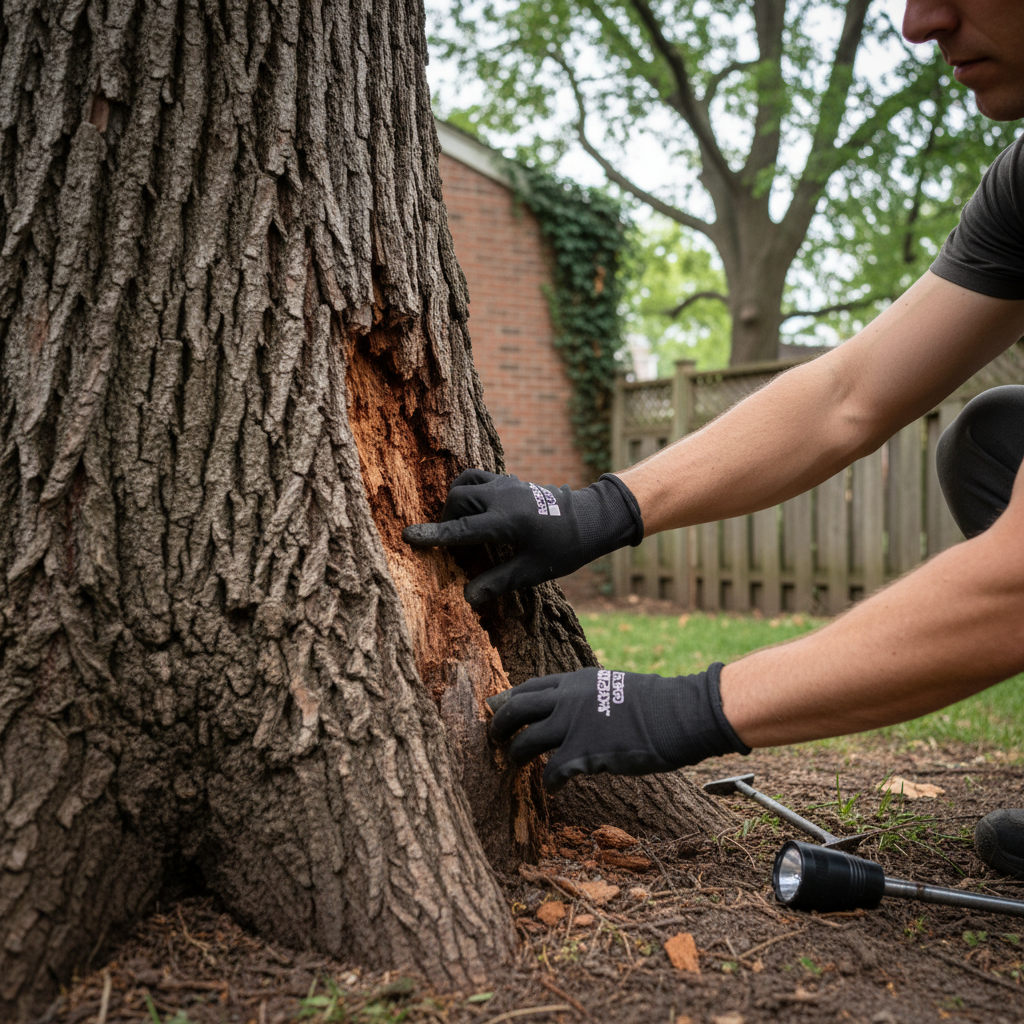
Document before anything is moved. Before the tree service does any work, photograph and video everything from multiple angles. Inside the house, outside, close-ups of the point of impact, wide shots showing the full tree and property. Taken after cleanup, photos are worth almost nothing for claims purposes.
Emergency hazard mitigation first. Covering a breach in your roof to prevent additional water damage is typically covered as emergency repair. Do that immediately if water is getting in. But before you authorize full removal, contact your insurer and find out if they want to send an adjuster first. Know which approach your insurer requires before committing thousands of dollars.
Get a professional written assessment. If there is any question of negligence, a written tree risk assessment from a qualified tree care professional documents the condition of the tree before removal. Once the tree is gone, proving it was healthy, or was not, is much harder. Our Brooklyn and Queens service teams provide written assessments that hold up in insurance disputes.
Do not dispose of the tree before the adjuster sees it. A tree sitting on your roof for an extra day is annoying. Losing your claim because the evidence is gone is worse. Ask your insurer specifically whether they need to inspect before removal.
What to Do Before the Next Storm Hits
The best time to deal with storm-damaged trees is before they become storm-damaged. In NYC, that means having a tree professional assess your larger trees every few years, and especially after any major weather event such as ice storms, nor’easters, and the increasingly common late-summer wind events.
Dead branches, co-dominant stems, included bark, and signs of decay at the base all dramatically increase a tree’s failure risk in storms. None of these are visible from your kitchen window. A climbing assessment or aerial inspection reveals them.
Why this matters for insurance: if you have a documented assessment showing your trees were healthy, and one fails in a storm, your claim is clean. If an assessment identifies a hazardous tree and you address it, you avoid the scenario where a claim gets denied because of known, unaddressed risk. Many clients in Bay Ridge, Marine Park, and Staten Island have us out annually for exactly this reason. It is far cheaper than a denied insurance claim on a $40,000 roof repair.
If you’ve got a tree you are concerned about, or if a storm just left you with a problem, request a tree assessment. We will tell you what you are working with and what it will cost before any work begins.
Download: Storm Tree Insurance Quick Guide (PDF)
A one-page reference covering what’s covered, what is not, and the step-by-step claims process for NYC homeowners.
Download PDF GuideFrequently Asked Questions
Does homeowners insurance cover a tree that fell but did not hit anything?
Generally no. If a storm drops a tree into your yard and it misses all structures, most standard policies do not cover removal costs. Check your declarations page for a debris removal clause, as some policies include it regardless of impact.
My neighbor’s healthy tree fell on my house during a storm. Do I claim on their insurance or mine?
Your own insurance, in most cases. If the tree was healthy and fell due to a storm, your neighbor is not liable. Their liability insurance would only apply if they were negligent, meaning they knew the tree was hazardous and failed to act. You would need evidence of that negligence to pursue their insurer.
How much does homeowners insurance typically pay for tree removal in NYC?
Most standard policies cap tree removal at $500 to $1,000 per tree. Given NYC costs, this rarely covers the full removal. Actual costs run $2,000 to $6,500 or more for a large tree in a tight urban setting.
Can my insurance claim be denied if I knew the tree was dead?
Yes. Negligence is a common grounds for denial. If your insurer can show you knew, or should have known, the tree was dead or structurally compromised, they may refuse to pay the damage claim.
A city street tree fell on my car during a storm. Who pays?
Your auto insurance (comprehensive coverage), in most cases. Filing a Notice of Claim with the NYC Comptroller’s Office within 90 days is the required first step if you want to pursue the city for a street tree incident.
Get a Written Tree Assessment Before Your Next Claim
Our Brooklyn and Queens team documents what we find so you are protected before and after a storm.
Request a Free Assessment