
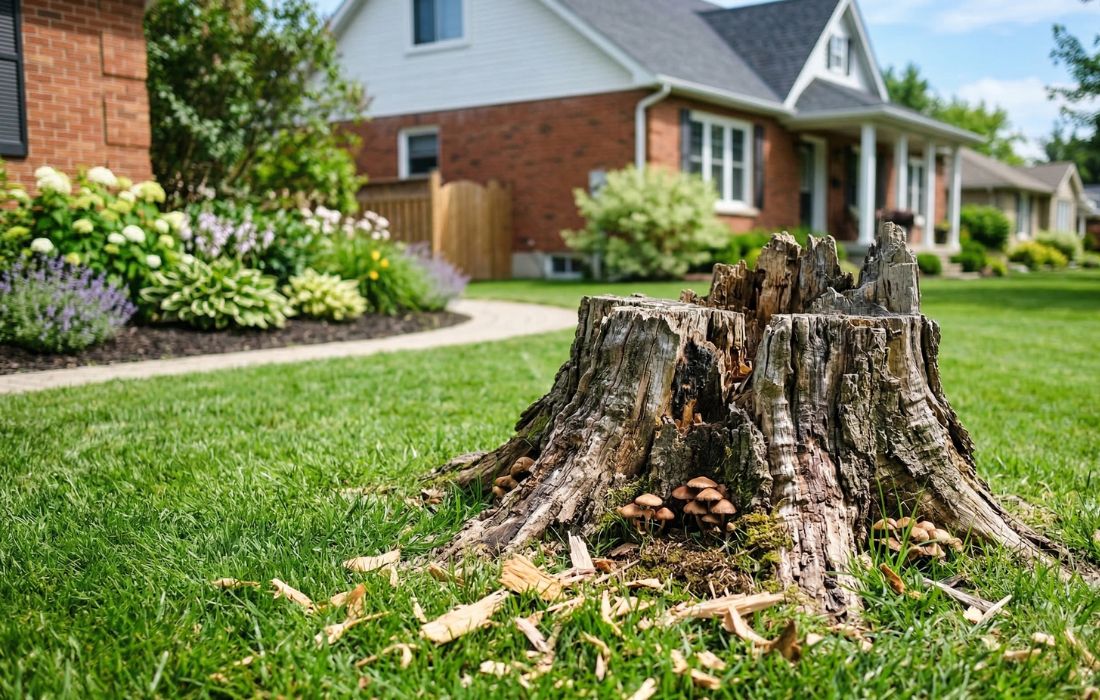
If you choose to leave a tree stump in your yard, it will slowly undergo a natural decay process that takes anywhere from three to ten years. During this time, the rotting tree base becomes a magnet for invasive pests like termites and carpenter ants. The decaying wood in your lawn also spreads harmful root diseases, depletes soil nutrients, and creates serious trip hazards that can lead to costly homeowner liability claims.
Will an untreated stump attract pests to my home?
The short answer is absolutely. Dead wood is basically a free buffet for wood-boring insects. When you leave a tree stump in your yard, you are rolling out the red carpet for unwanted guests.
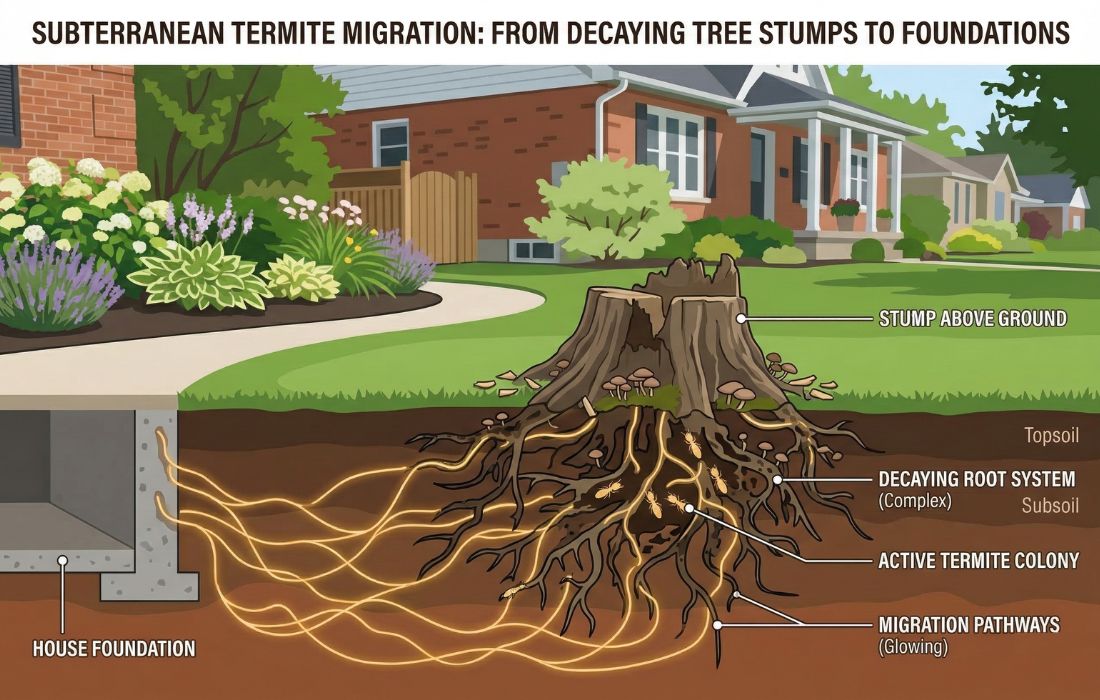
These pests do not just stay in the yard. As the colony grows, they will actively look for new food sources. Your home is usually the closest target.
Here are the most common pests attracted to an untreated stump:
- Termites: These destructive insects use the decaying roots as a staging ground before moving toward your home foundation.
- Carpenter Ants: They love to build massive nests inside damp, rotting wood.
- Wood-Boring Beetles: These bugs accelerate the decay process and can migrate to wooden patio furniture or deck posts.
- Wasps and Yellow Jackets: Hollowed-out sections of the stump provide perfect cavities for aggressive stinging insects to build hidden hives.
Pest Threat Level Overview
| Pest Type | Primary Target | Threat Level to Home |
|---|---|---|
| Termites | Foundation and structural wood | Severe |
| Carpenter Ants | Damp structural wood | High |
| Wasps & Yellow Jackets | Yard safety and pets | Moderate |
Can a leftover stump spread diseases to other plants?
Yes, an abandoned tree root system is a major biological hazard for the rest of your landscaping. A chopped tree might look dead on the surface, but the root system can still harbor aggressive fungi.
If you choose to leave a tree stump in your yard, fungal infections can easily spread through the soil. Here is how diseases impact your healthy plants:
- Root-to-Root Contact: Pathogens travel underground from the dead stump to nearby healthy roots.
- Spore Dispersal: Fungi growing on the stump surface release spores into the air.
- Soil Contamination: The immediate soil becomes highly acidic and infectious.
The Environmental Protection Agency (EPA) and various agricultural extensions warn about the dangers of unchecked wood decay. The breakdown process actively alters your soil chemistry. As the wood rots, it leaches nitrogen from the surrounding dirt.
Here is how the decaying process impacts your garden:
- Nitrogen Depletion: Grass and plants near the stump will turn yellow and struggle to grow.
- Armillaria Root Rot: This dangerous fungus thrives on dead stumps and spreads to living plant roots.
- Unwanted Sprout Growth: Some stumps try to survive by shooting up rapid, nutrient-sucking sprouts called suckers.
What are the hidden safety and liability risks of abandoned tree roots?
We often forget that a stump is a physical obstacle. When you leave a tree stump in your yard, you create a permanent tripping hazard. Over time, tall grass and weeds will completely camouflage the stump.
This creates a serious risk for children playing in the yard. It is also extremely dangerous for anyone operating a lawnmower or weed whacker. Hitting a hidden piece of solid wood can instantly destroy expensive landscaping equipment.
The liability issues are even more concerning. If a neighbor or a delivery person trips over the hidden stump on your property, you could be held legally responsible for their medical bills.
Common Liability Risks of Ignoring a Chopped Tree:
- Lawn Equipment Damage: Broken mower blades, bent engine shafts, and thrown debris.
- Personal Injury: Sprained ankles and broken bones from tripping over concealed roots.
- Insurance Claims: Potential lawsuits if a guest gets injured on your property due to a known hazard.
Does a decaying stump lower property value?
Curb appeal matters significantly when evaluating a property. A rotting, ugly stump sitting in the middle of a perfectly manicured lawn is a massive eyesore. It signals to visitors and potential buyers that the property is not fully maintained.
Real estate agents frequently advise clients to remove stumps before listing a house. Buyers see an untreated stump and immediately calculate the hidden costs they will have to cover. They also worry about the potential pest infestations discussed earlier.
Below is a quick comparison of how a stump affects your yard over time:
| Timeframe | Visual Impact | Environmental Impact | Hazard Level |
|---|---|---|---|
| 0 to 1 Year | Looks like a fresh cut | Sucker sprouts begin to grow rapidly | High visibility, low trip risk |
| 1 to 3 Years | Bark falls off, wood grays | Fungi and mushrooms begin to bloom | High trip risk as grass covers it |
| 3 to 5 Years | Wood becomes spongy | Termite and ant colonies establish | Severe risk to surrounding lawn equipment |
| 5+ Years | Collapses into the ground | Soil nitrogen is heavily depleted | Sinkhole formation begins |
Stump Grinding vs. Total Removal: Which is better?
Now that you know the risks, you need a solution. You generally have two professional options to deal with the problem. Both are vastly superior to simply hoping the wood rots away quickly.
If you are unsure which path to take, you can always read our comprehensive breakdown on understanding stump grinding versus stump removal.
Stump grinding uses a heavy machine to shred the wood down below the soil level. This is fast, cost effective, and leaves you with nutrient rich mulch. Total removal involves excavating the entire massive root ball out of the earth.
Signs You Need Immediate Stump Removal:
- Visible termite tubes or ant trails near the stump.
- Soft, spongy wood that easily breaks apart.
- The stump is located close to your foundation or driveway.
- New sprouts are aggressively growing around the base.
Quick Comparison Table
| Feature | Stump Grinding | Total Stump Removal |
|---|---|---|
| Process | Shreds wood below grade | Excavates entire root ball |
| Cost | Highly affordable | More expensive |
| Lawn Impact | Minimal disruption | Requires filling a large hole |
| Best For | Standard lawns and gardens | New construction or deep foundations |
Ready to completely reclaim your lawn?
Ultimately, choosing to leave a tree stump in your yard is a gamble with your property health and personal safety. The initial savings are quickly wiped out by pest control bills, broken lawnmowers, and diseased landscaping. It is always better to finish the job correctly.
Do not let a decaying piece of wood ruin your beautiful landscape. If you are tired of mowing around that ugly hazard, we are here to help. Reach out to Dragonetti Tree Removal today to schedule a fast and professional stump removal service tailored to your specific property needs.