
Quick Solution: How To Remove Snow From Trees Safely
If you just need the basics, here’s the safest way to remove snow from trees during a NYC winter:
- Wait until snowfall ends
- Start with the lowest branches and move upward
- Method 1: Gently tap branches from underneath using a broom handle or pole
- Method 2: Brush snow off smaller branches instead of pulling it
- Never shake branches or force snow off
- Move fallen snow away from the trunk when finished
Table of Contents
Introduction
Why Do I Need To Remove The Snow On My Tree?
How To Remove Snow From Your Tree Without Damaging It
Method 1: Tapping Snow Off With a Tool
Method 2: Gently Remove Snow With a Brush
What To Avoid When Removing Snow To Protect Your Trees
How To Prevent Snow From Sticking to Tree Branches Before Winter
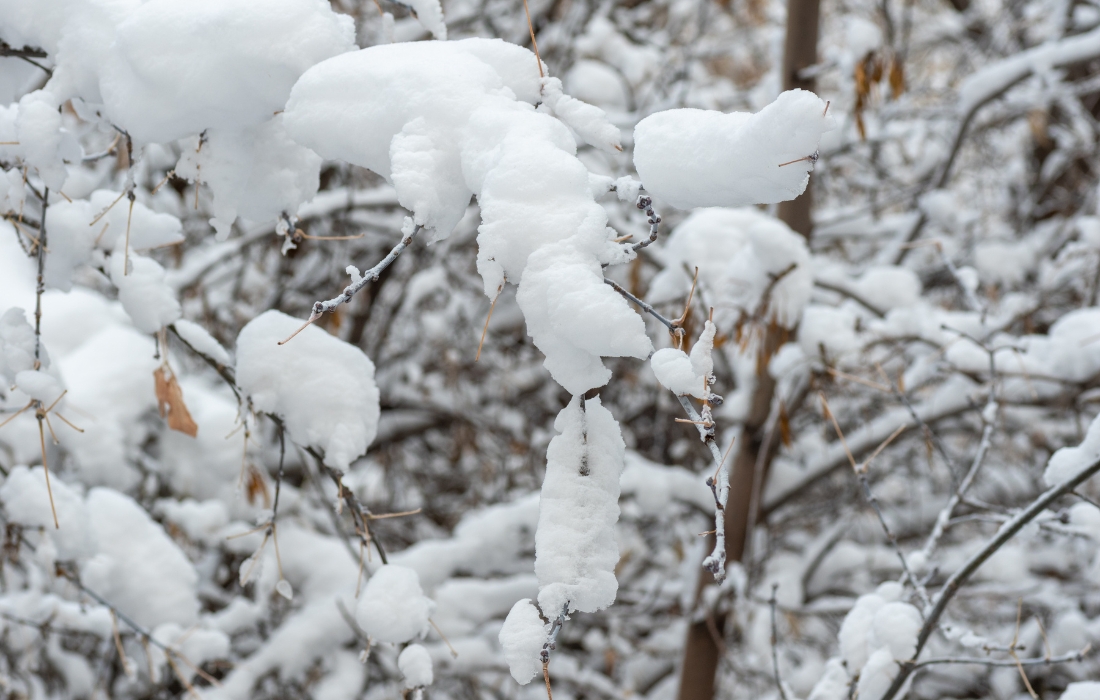
New York City winters can dump heavy, wet snow that sticks to trees fast. Across all five boroughs, we see branches bend, split, or snap because snow was left sitting too long or removed the wrong way. Read more to find out how to remove snow from trees safely using simple tools you can find at home, so your trees make it through winter strong and ready for spring!
Why Do I Need To Remove The Snow On My Tree?
Usually, light snow is fine to let melt on its own, but heavy snow is when it gets worrisome. Removing snow from your trees helps protect branches from bending too far and breaking under the weight. Snow in the city is often wet and compact, which makes it heavier than it looks. When snow stays on branches:
- Limbs droop and weaken, making them more prone to breakage
- Cracks form that worsen over time
- Trees lose energy trying to recover
Getting rid of snow from your tree early keeps stress low and helps trees stay healthy in tight city environments where they already work harder to survive from other stressors like pollution, salt exposure, and limited root space.
When your tree is already impacted by these issues, you may have to call for certified tree clearing to guarantee the safety of your home.
How To Remove Snow From Your Tree Without Damaging It
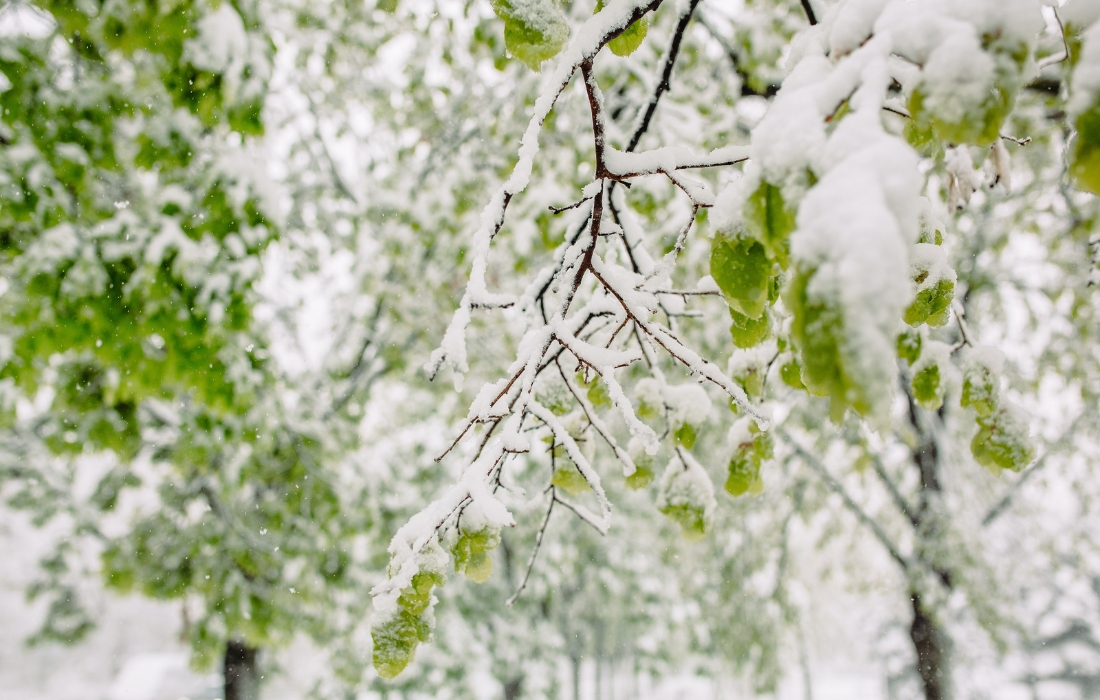
The safest way to remove snow from trees is with slow, gentle action. Rushing or forcing snow off almost always causes damage.
Before you begin:
- Wait until the storm ends
- Bundle up with winter clothes, wear gloves, and boots with a good grip
- Stand clear of where snow may fall
Tree snow removal should feel controlled and light. If a branch feels stiff or frozen solid, it’s safer to leave it alone and let the snow melt naturally or try removal later.
Method 1: Tapping Snow Off With a Tool
This method works best for branches that are out of reach but still flexible.
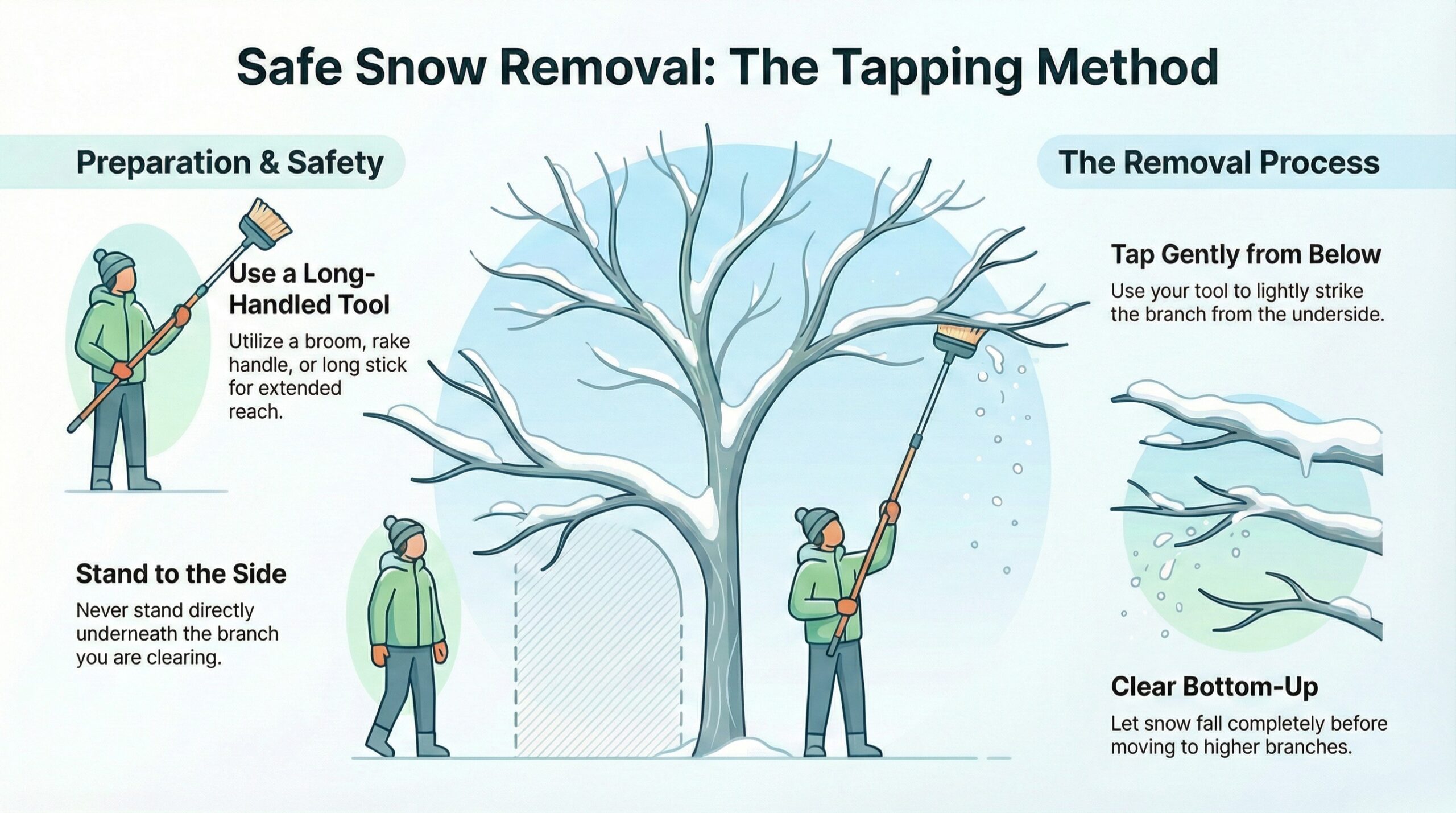
Step by Step for this Method
- Use a broom/rake handle, long stick, or similar tool
- Stand to the side, not directly underneath
- Tap the branch gently from below
- Let snow fall off before moving higher
This technique helps remove snow from trees without putting all the weight in one spot. Light taps work better than hard hits. Again, if the snow needs more than a light tap, don’t force it and leave it alone.
Method 2: Gently Remove Snow With a Brush
This method is ideal for smaller trees, sidewalk plantings, or low branches near buildings.
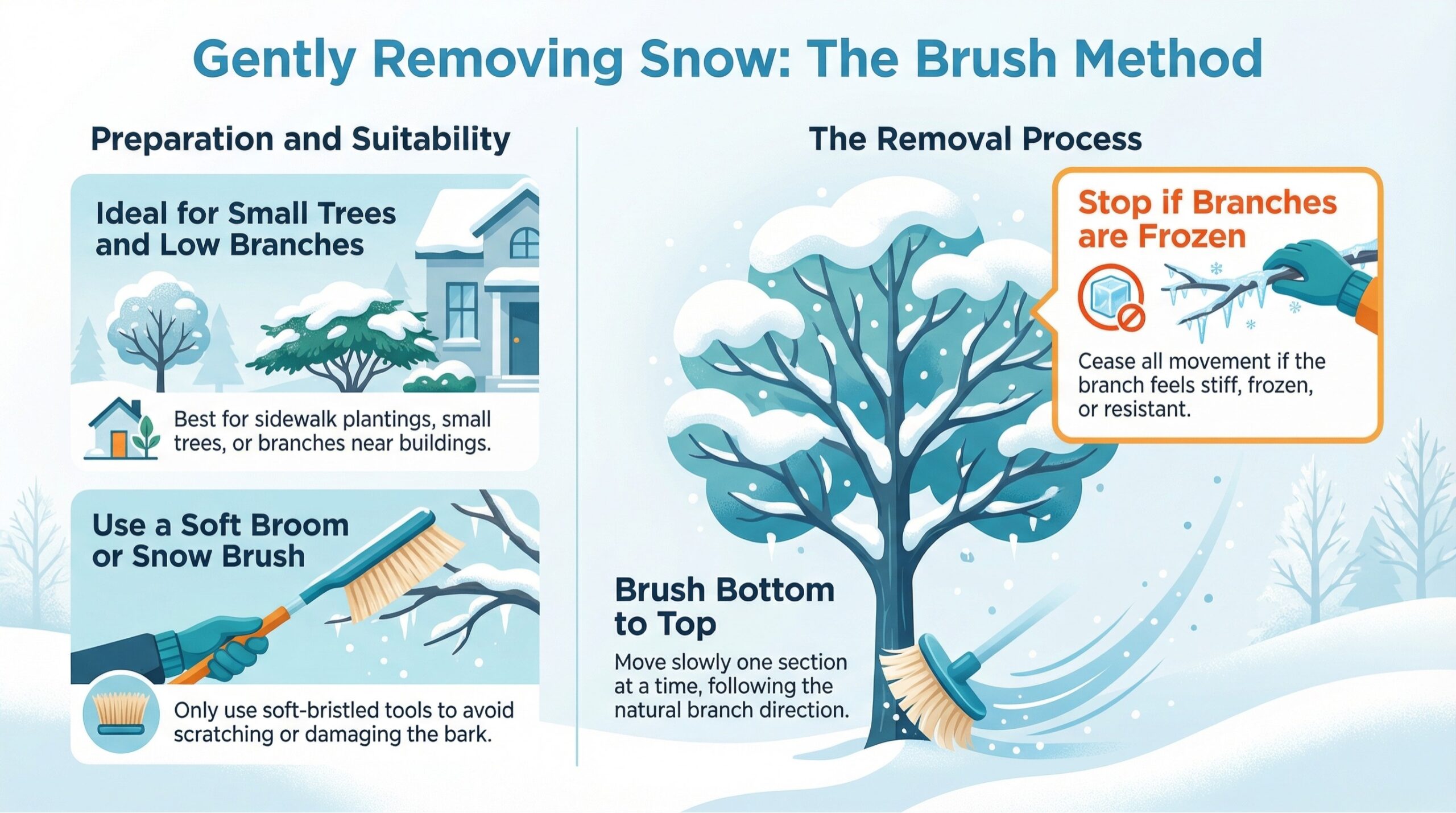
Step by Step for this Method
- Use a soft broom or snow brush
- Brush snow off slowly, one section at a time, bottom to top
- Follow the natural direction of the branch
- Stop if the branch feels stiff or frozen
Taking snow off your trees this way avoids bark damage and keeps pressure low, which is especially important in narrow city spaces in New York City and the 5 boroughs.
What To Avoid When Removing Snow To Protect Your Trees
Shaking Your Tree Branches To Get Rid of Snow
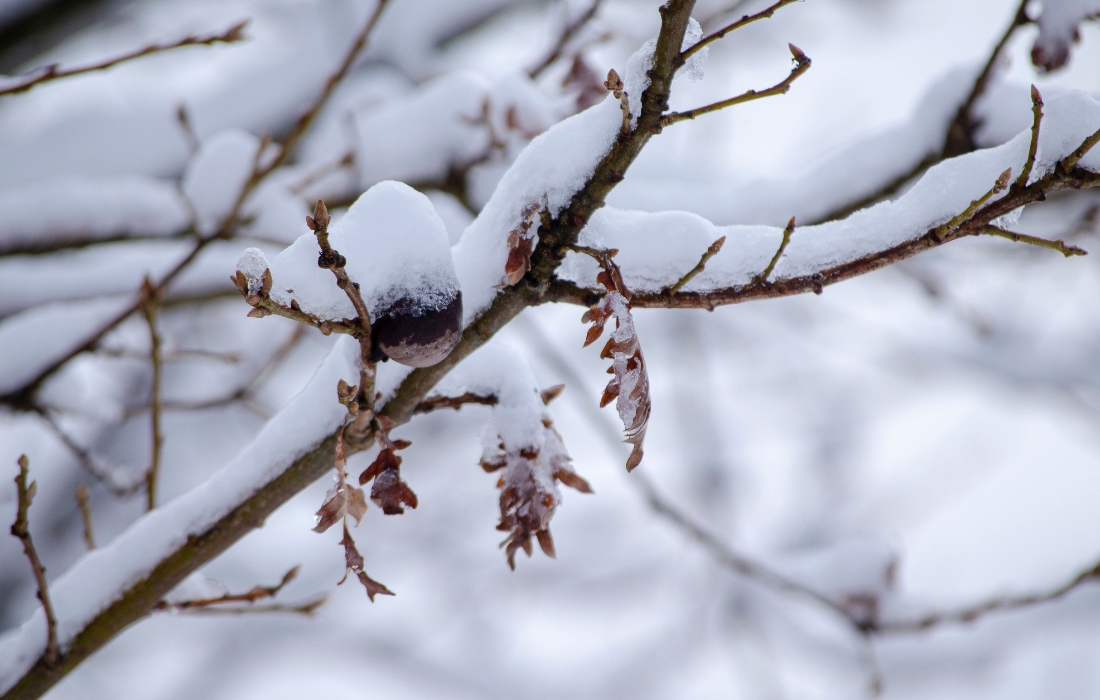
Shaking your tree branches is easy, but frozen wood breaks fast. Sudden movement causes cracks that often go unnoticed until warmer weather. You should never force or be harsh with trees, especially in the winter when their cold branches are more fragile. Avoid shaking because:
- Ice makes branches stiff
- Quick movement causes snapping
- Damage often shows up months later
Tree snow removal should never involve pulling or jerking branches.
Using Salt On Your Tree For Snow Control
Salt damages trees. Even small amounts burn roots and harm the soil around them. It causes:
- Weak root growth
- Discolored leaves or needles
- Long-term stress even in later seasons
Salt messes with how your tree takes in water and nutrients, and it can physically injure roots and bark. Removing snow from your trees should always be done by hand or with tools, never with chemicals.
Leaving Snow Near The Tree’s Trunk or Roots
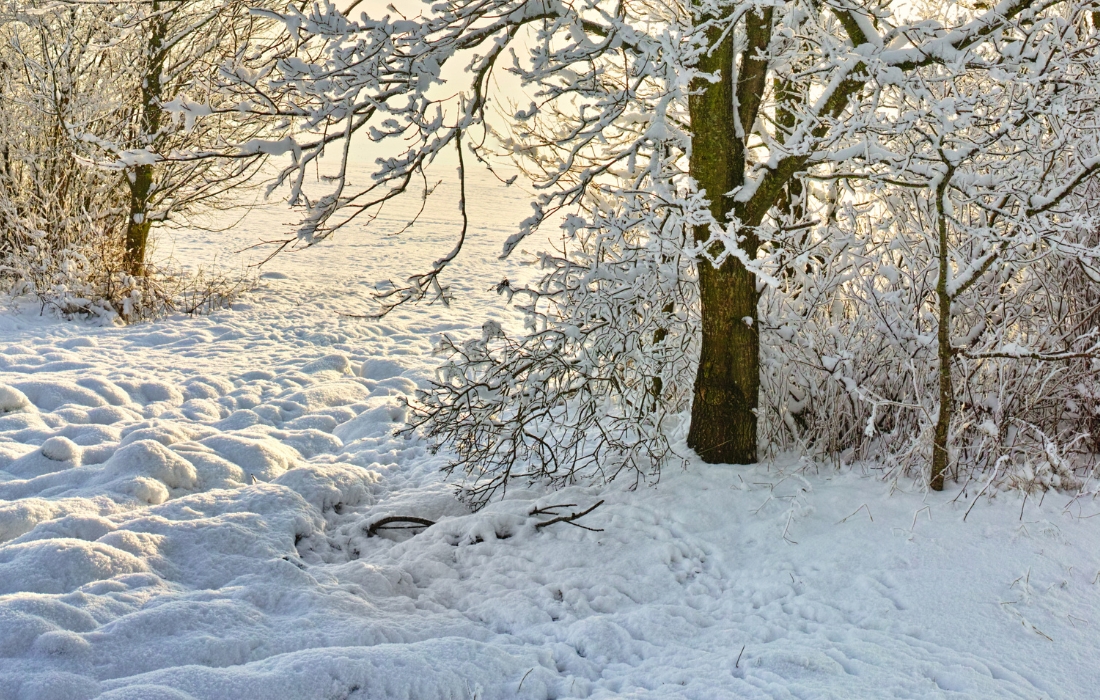
While naturally fallen, soft, snow can insulate tree roots, piling unnaturally fallen snow that’s more wet and heavy at the base of a tree creates problems as it melts and refreezes. Some problems that may come up are:
- Roots lose air access
- Moisture stays trapped, making a perfect breeding ground for diseases
- Bark damage becomes more likely as pests love hiding in the snow
After you remove snow from trees, push extra snow away from the trunk so the base stays clear and controlled.
How To Prevent Snow From Sticking to Tree Branches Before Winter
You can’t control the weather, but you can help your trees handle snow better before the first storm arrives. A little prep in fall makes winter much easier on branches.
- Keep trees healthy with proper watering before the ground freezes
- Remove dead or weak branches early so snow has less to cling to
- Avoid heavy fall fertilizing that causes soft new growth
- Make sure soil around the tree drains well and isn’t compacted
- Give young or flexible trees extra space so branches aren’t crowded
We know snow is part of winter life in New York City, but broken branches don’t have to be. When you remove snow from trees the right way, you protect their structure and help them recover faster once spring arrives. Remember to always take the calmer, controlled methods when handling your trees.