
Table of Contents
5 Ways to Prevent Winter Wind Damage on Your Trees
1. Prune Your Tree’s Structure Before Winter
2. Inspect Trees for Warning Signs of Breakage
3. Protect Your Tree’s Roots With Mulch
4. Add Supports for Young or Newly Planted Trees
5. Reduce Snow and Ice Stress From Your Trees
When Wind Can Permanently Damage Your Tree
Plan Ahead Before the Next Wind Storm
5 Ways to Prevent Winter Wind Damage on Your Trees
1. Prune Your Tree’s Structure Before Winter
Prune your tree’s structure so that it can withstand higher winds by reducing resistance and preventing tree wind damage. This step removes weak points and eliminates any counterproductive weight.
What to focus on removing from your tree before winter
- Dead or dying branches
- Long, overextended limbs that catch the wind
- Crossing or rubbing branches
- Weak branch unions with narrow angles
Late fall is ideal for pruning. Avoid heavy pruning during extreme cold. Heavy pruning during extreme cold can damage brittle wood and leave fresh cuts unable to heal, increasing the risk of dieback, cracking, disease, and future tree wind damage.
2. Inspect Trees for Warning Signs of Breakage
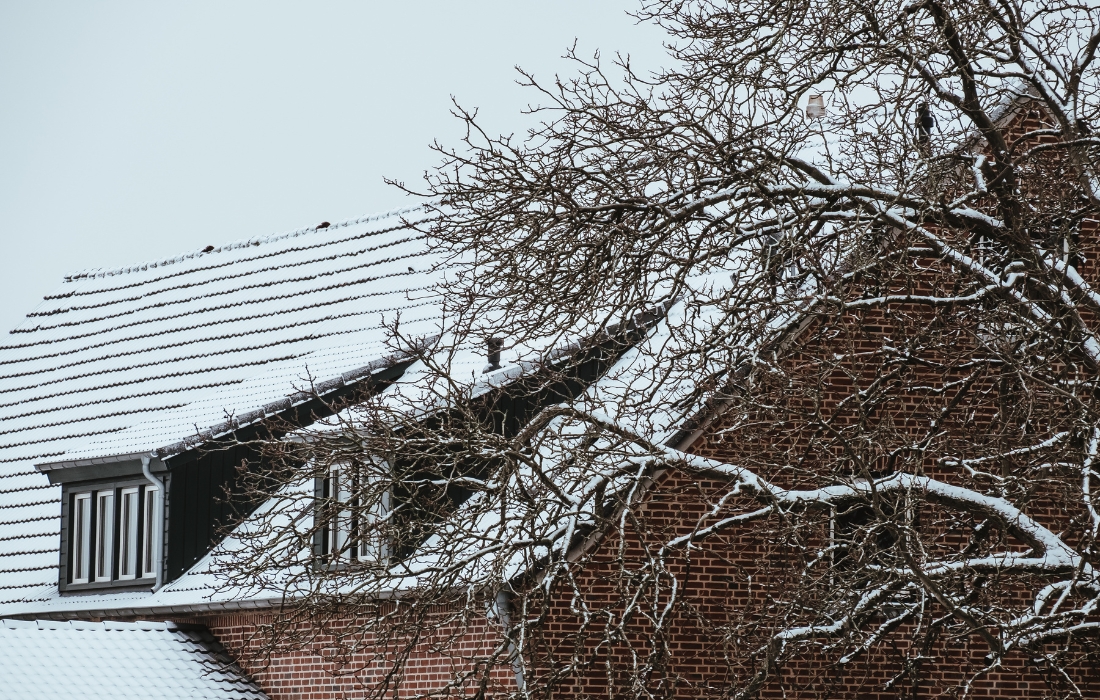
You should inspect your trees as a proactive approach to finding signs of breakage or damage. Unhealthy or damaged trees are far more likely to fail during winter storms.
What to look for when inspecting trees for damage
- Cracks or splits in the trunk
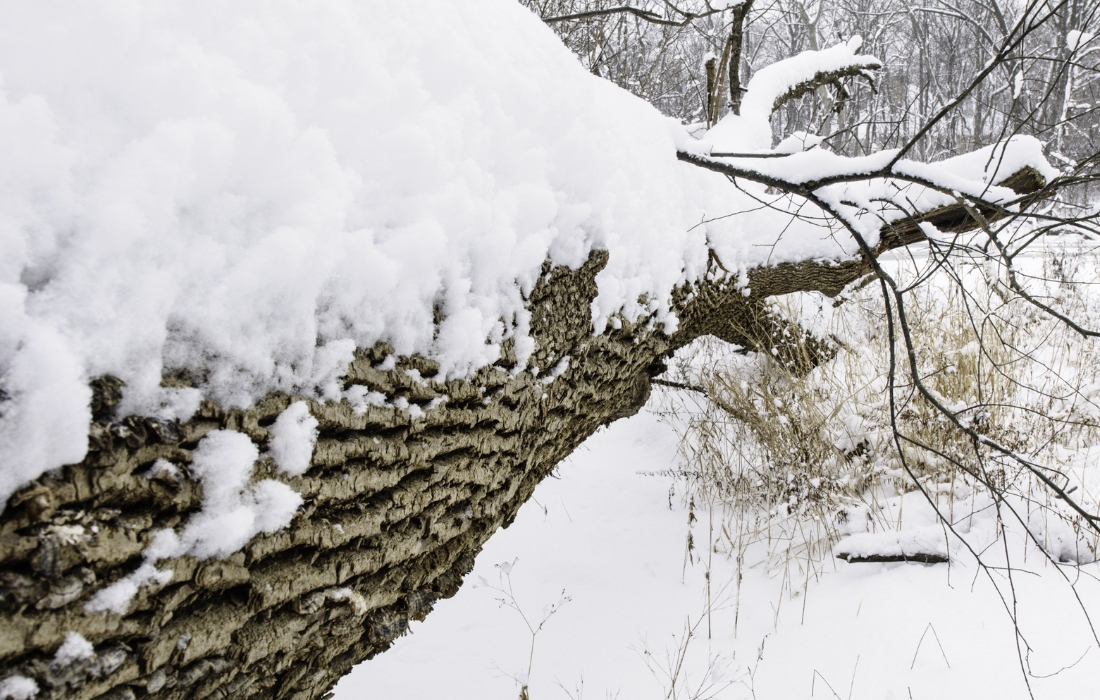
- Visible rot or fungal growth (mushrooms, discoloration, sap, cracks, rotting wood under peeling bark)
- Hollow areas or cavities
- Leaning trees or exposed roots
If you spot any of these issues, a licensed tree cutting service can help determine the risk level before a storm hits and act accordingly, depending on whether your tree needs a maintenance trim or full removal.
3. Protect Your Tree’s Roots With Mulch
Protecting your tree’s roots with mulch will help them stay grounded once the winter winds pick up and reduce the risk of tree wind damage. Here are the best practices to follow when mulching trees in the winter:
- Apply 2 to 4 inches of mulch around the base
- Keep mulch several inches away from the trunk
- Use natural mulch like wood chips or bark
Mulching helps regulate soil temperature and prevents roots from freezing and loosening.
4. Add Supports for Young or Newly Planted Trees
Young and newly planted trees are especially vulnerable during their first few winters. That’s why it’s important to make sure they get the care they need to grow big and strong!
How to add stability to your young trees against wind
- Use flexible ties, not rigid wire
- Allow slight movement to encourage root strength
- Remove stakes after one growing season
Over-staking can weaken trees, so temporary support is perfect over the winter season.
5. Reduce Snow and Ice Stress From Your Trees
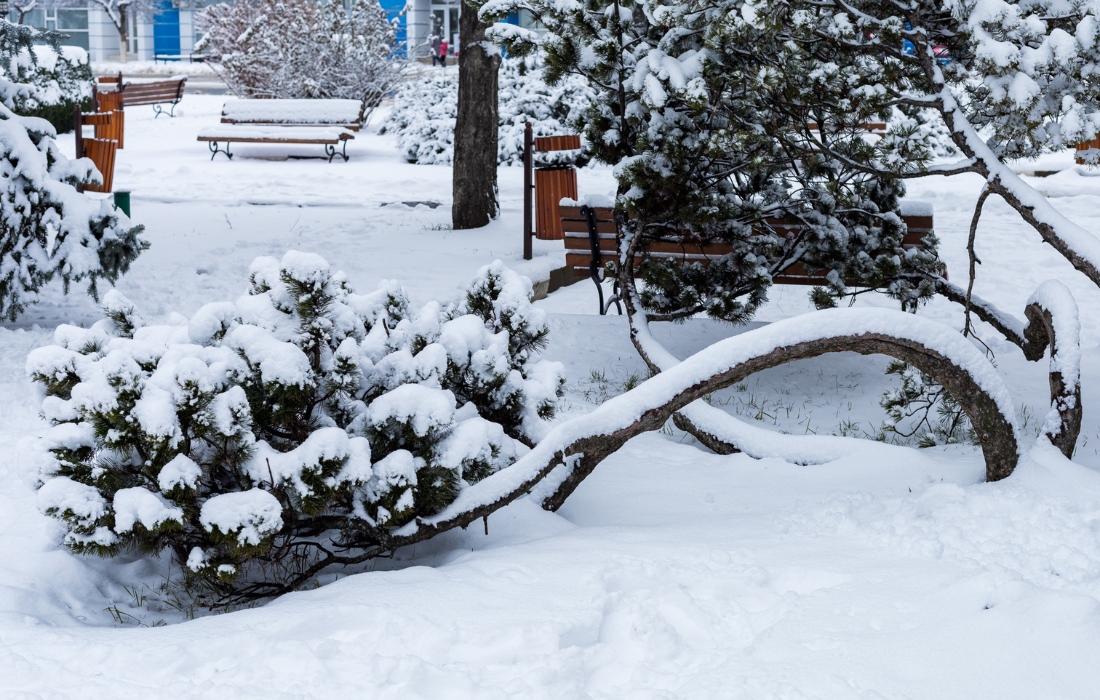
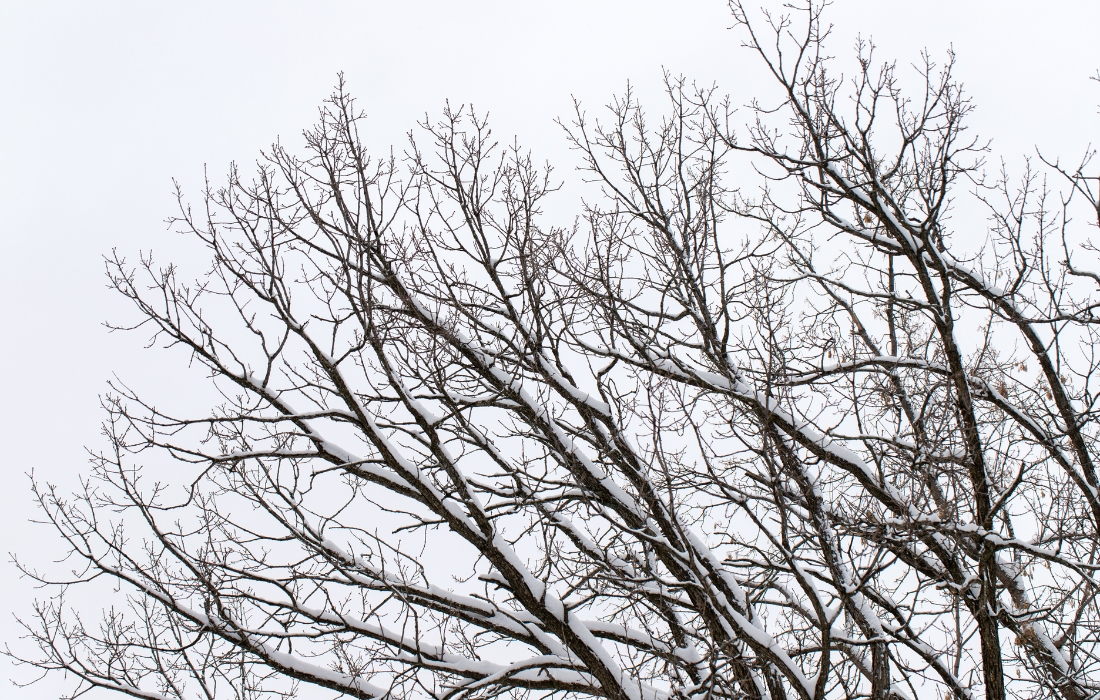
Snow and ice add weight to the branches of your trees, making them more likely to snap once wind hits and cause serious tree wind damage.
How to remove snow and ice from tree branches after a snow storm
- Gently brush off heavy snow with a broom
- Avoid shaking branches
- Never try to chip or knock off ice, it’s safest to leave them alone and let the ice melt naturally to avoid breakage and injury
When Wind Can Permanently Damage Your Tree
Some trees are more vulnerable to high winds and may be permanently damaged. Consider removal if your tree has:
- A severe lean toward a home, driveway, or power lines
- Large dead or weakened limbs that can catch the wind
- Significant trunk cracks, splits, or decay
- A history of branches failing during past wind or winter storms
In these cases, preventative removal is often safer and more cost-effective than dealing with emergency damage after a storm.
Plan Ahead Before the Next Wind Storm
The wind in New York City and surrounding areas is unpredictable so preparation definitely helps reduce risk of long-term damage. Before winter hits, focus on:
- Routine tree inspections
- Seasonal pruning
- Early intervention for problem trees
Addressing issues ahead of time can help your trees weather New York’s toughest winter conditions and keep your property safe in any weather conditions.