
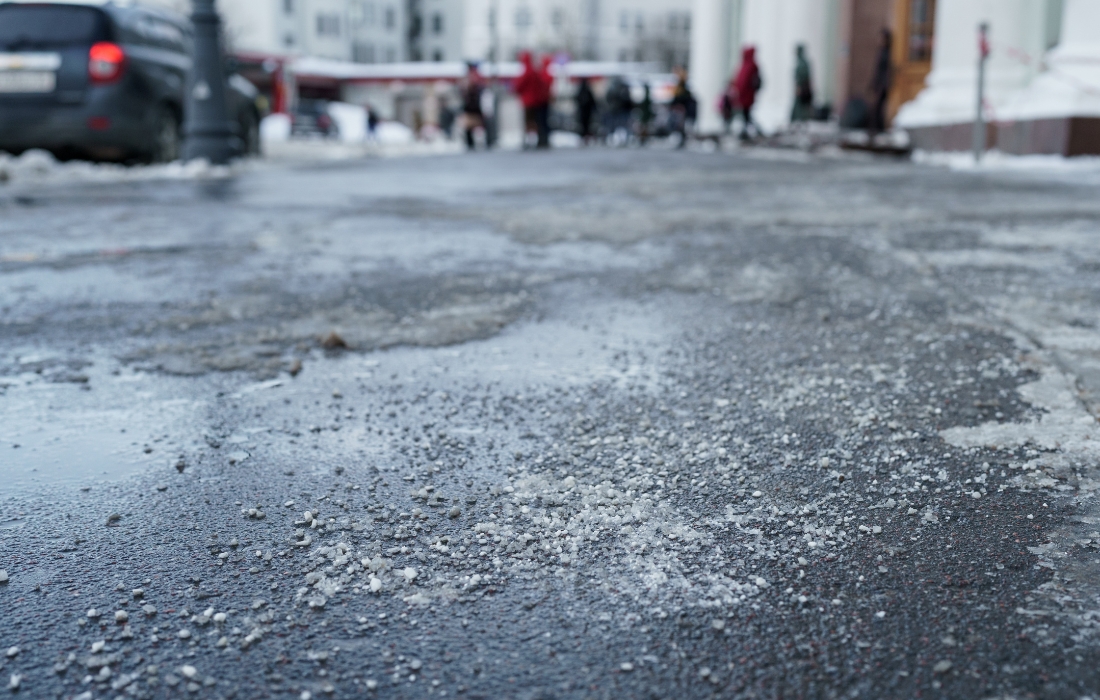
We all know that winters in New York City means snowstorms, icy sidewalks, and heavy salting across the boroughs. And yes, salt helps keep people safe, but it quietly harms nearby trees year after year.
Not to fret! As arborists working in the New York City, we see road salt tree damage show up every spring in ways homeowners don’t expect. So, we’ll explain how salt affects trees, how to spot damage early, how to help trees recover, and most importantly, how to prevent salt damage in the first place so you don’t have to worry about it during harsh New York City winters.
How Road Salt Damages Your Tree
Salt causes damage in two main ways: direct contact and soil contamination.
Cars and plows spray salty slush onto branches, trunks, and buds. This salty film pulls moisture out of leaves and needles, drying them out and causing a “burn” effect. As the moisture leaves, the cells die, which is why the damage looks burnt even though no heat is involved. In the busy streets of NYC, trees closest to traffic take the hardest hit.
Salt also wiggles its way into the soil as snow melts. Once underground, the salt makes it harder for roots to absorb water and nutrients. This is because salt pulls water away from tree roots, even when the soil looks wet. That makes it harder for the tree to drink. At the same time, salt gets in the way of nutrients the tree needs to stay healthy, so the roots can’t take them in properly. Over time, repeated exposure leads to ongoing road salt tree damage that weakens trees season after season.
Common Signs of Salt and Chemical Damage on Your Trees
Most salt damage shows up in late winter or early spring. Here’s what you should be looking out for:
- Brown or yellow leaf edges
- Needles turning rusty or dropping early
- Bare branches on the street-facing side
- Slow or uneven growth in spring
- White crusty residue on soil or bark near curbs
In NYC neighborhoods, these patterns almost always point to road salt tree damage, not poor watering or insects.
Trees Most Vulnerable to Salt and De-Icing Chemical Damage
Not all trees react the same way. In New York City, these trees are the most sensitive to salt:
- Sugar maple
- Red maple
- Dogwood
- Japanese maple
- Eastern white pine
In special cases like evergreens, you have to be more careful. They keep their needles all winter, so when salty spray lands on them, it sticks instead of falling away. With little rain and frozen conditions, the salt stays on the needles for months, slowly drying them out and causing damage. Young trees and recently planted street trees in Queens, Brooklyn, and Staten Island are also at higher risk since their roots haven’t spread far enough to escape salty soil.
Preventing Road Salt Damage Before It Starts
Prevention is where homeowners can make the biggest difference. Small changes before and during winter can greatly reduce road salt damage to trees.
Use Alternatives for Melting Snow
On private walkways and driveways, try using sand, gravel or traction grit for better grip and snow melting. These alternatives are better for the health of your tree consider they can’t be absorbed by it. If salt is necessary, use it sparingly and avoid spreading it near tree bases.
Be Smart with Salt Placement
Put salt only where ice actually forms. In this case, more is not merrier. Avoid tossing it into tree pits or planting beds and be mindful of where you place the salt.
Change the Path of Snow Piles
Snow pushed to the same spot all winter creates a salt hotspot. Move snow away from tree bases and toward areas where runoff won’t soak into roots.
Create Simple Barriers
Burlap screens or temporary fencing can block any salt from hitting branches, especially for trees close to roads or sidewalks.
Prune Weak Branches Before Winter
Getting rid of any dead or weak branches will reduce the likelihood of them breaking and prevent salt from seeping into those areas of exposed tissue that you may not see.
Improve Soil Health Before Winter
Healthy soil holds water and air better. Adding organic matter in the fall helps roots tolerate stress when salt enters the soil.
Plan Planting Locations Wisely
If you’re planting new trees, keep them at a distance from curbs and road edges. Try planting a few extra feet to see salt exposure significantly.
Recovering Salt-Damaged Trees at Home
If damage has already occurred, recovery takes patience.
Flush the Soil in Early Spring
Once temperatures stay above freezing, water slowly for 20 to 30 minutes to push salt deeper into the ground.
Rinse Salt Spray on Mild Days
On warmer winter days, gently rinse branches and needles with water to prevent salt buildup.
Mulch Correctly
Add 2 to 3 inches of mulch, keeping it away from the trunk. Mulch helps retain moisture and protects roots.
Avoid Easy Solutions
Skip fertilizer until the tree shows steady new growth. Trees stressed by road salt damage need time to stabilize first.
When Salt-Damaged Trees Become a Safety Hazard
If you continue to let salt fester on your trees, it’ll only keep weakening the roots and the tree’s wood structure. In crowded areas of Manhattan and the Bronx, this can lead to leaning, cracking, and falling limbs. Keep an eye out for constant dieback, visible trunk splits, or lifting soil at the base of the tree, as these are common signs of long-term road salt tree damage. When a tree reaches this stage, homeowners often need to explore safe tree take-down options to prevent injury or property damage.
Road salt is a necessary part of winter life in New York City, but serious tree decline doesn’t have to be. Help your tree survive the harsh winters and keep growing strong for years to come!