
When it comes to cutting neighbors tree branches legally, you possess the absolute right to trim any branches that cross the vertical plane of your property line. You cannot cross the property line to perform the work. You also cannot cause fatal structural damage to the tree while making your cuts.
What Is The Exact Rule For Trimming Overhanging Branches?
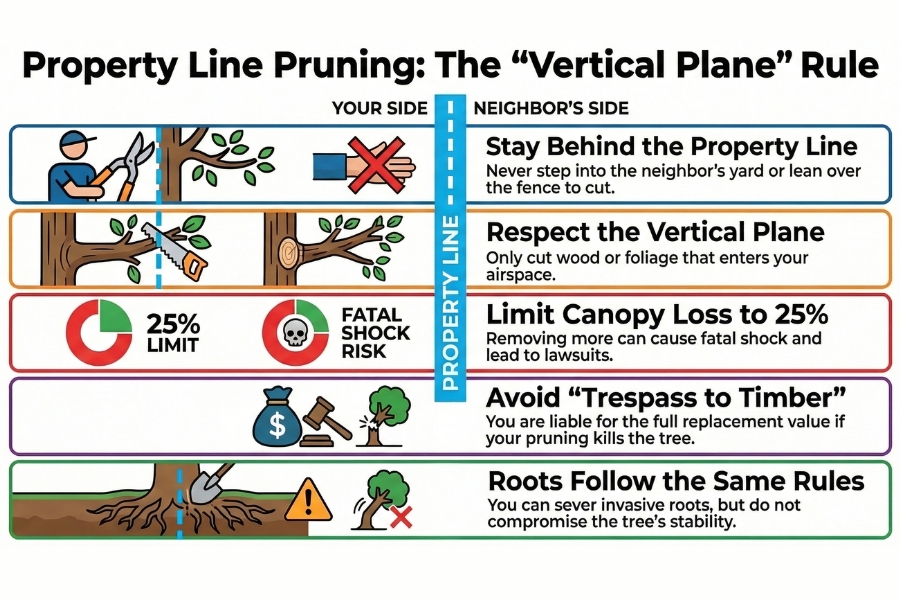
The law views your property as a three-dimensional space. This space extends from the ground straight up into the sky. Any wood or foliage that enters this airspace belongs to you.
Here are the strict boundaries you must follow:
- The Vertical Plane Rule: You may only cut up to the exact boundary line.
- No Trespassing: You cannot lean over the fence or step onto their yard to make a cut.
- No Poisoning: You cannot apply chemical herbicides that might seep into the roots on their side of the fence.
- Debris Ownership: You are generally responsible for disposing of the branches you cut.
Before you start hacking away at the canopy, it is highly recommended to check local municipal codes. You can review the official regulations on the NYC Parks Department website to ensure the tree does not belong to the city. City-owned trees have completely different protection laws.
Can Pruning Encroaching Foliage Get Me Sued?
Yes. You can absolutely face a lawsuit if you handle the pruning incorrectly. The right to trim stops the moment your actions threaten the life of the plant.
If your aggressive pruning causes the tree to die or fall over, you could be liable for “trespass to timber.” This means you might have to pay your neighbor the total replacement value of the mature tree. In places like Brooklyn or Queens, mature trees can be appraised at tens of thousands of dollars.
Here is a quick reference table for safe versus unsafe pruning actions.
| Action | Legal Status | Potential Risk |
| Cutting limbs crossing your fence | Legal | Low (if done cleanly) |
| Entering their yard to reach a branch | Illegal | Trespassing charge |
| Removing more than 25% of the canopy | Highly Risky | Fatal shock to the tree |
| Cutting the main trunk | Illegal | Severe property damage lawsuit |
What Should You Do When Navigating Property Line Tree Laws?
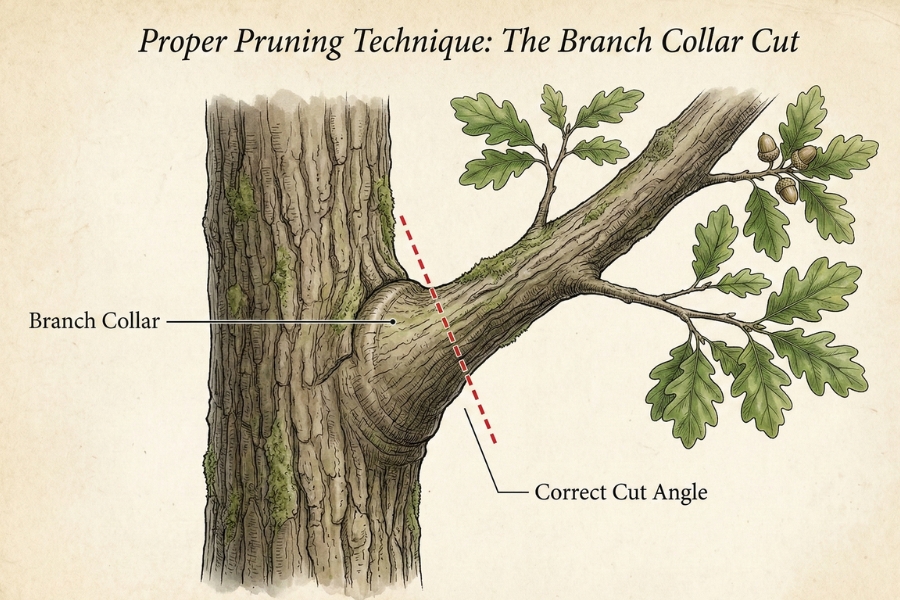
Do not grab a ladder and a hand saw if the branches are thick or high up. DIY pruning often leads to torn bark, which invites fungal infections that can slowly kill the tree. This puts you right back into the liability danger zone.
Instead of taking on the legal and physical risk yourself, you should consider hiring a certified arborist. Professionals know exactly how to balance the canopy while respecting the property boundary. If you are dealing with a massive canopy, you can explore professional tree pruning to handle the job safely and legally.
What Happens If The Roots Are Causing The Damage?
Branches dropping leaves are annoying, but invasive roots are a genuine structural emergency. Roots do not respect property lines. They will aggressively seek out moisture under your foundation or driveway.
The same vertical plane rule generally applies below ground. You are allowed to sever roots that cross into your soil. However, cutting major anchor roots can cause the massive tree to instantly become unstable and fall onto your house.
If you notice cracking concrete or raised pavers, you must be incredibly careful. It is best to have an expert assess the situation if you suspect tree roots lifting pavement on your property. A professional can sever the correct roots without creating a falling hazard.
Protect Your Property Without Breaking The Law
You do not have to live in the shadow of an overgrown nuisance. You have the right to reclaim your airspace and protect your roof. Just remember to respect the boundary line and prioritize the health of the tree to avoid expensive legal battles. Contact Dragonetti Tree Removal today to safely clear your property line without the stress.